
Grand Canyon Artist-in-Residence
I first learned about the Artist-in-Residence program at Grand Canyon National Park in May of 2008. Sally and I had made a return trip to the canyon—our first since 1999—to spend a week camping and making photographs. One afternoon, while reading the park newspaper, Sally noticed a small blurb about the Artist-in-Residence program and encouraged me to apply.
At the time, the idea felt wildly out of reach. I was living in Taos, New Mexico, managing a small retail store with Sally, selling everything from cell phones to cameras. Photography was already central to my life, but the notion of being selected as an Artist-in-Residence at the Grand Canyon felt aspirational at best. Still, after some reflection—and more than a little self-doubt—I decided to submit an application.
What Is an Artist-in-Residence?
An Artist-in-Residence program invites artists to live and work in a place for a defined period, offering the rare opportunity to experience it beyond the role of a visitor. At Grand Canyon National Park, artists are given time, access, and creative freedom to explore the landscape, engage with its history, and interpret its meaning through their work. In return, artists contribute back to the park through donated artwork, public programs, and educational outreach—helping share the canyon’s stories with a wider audience.
Beyond the Overlooks
In early October of 2008, a letter from the National Park Service arrived in the mail. I had been selected as an Artist-in-Residence for the 2009 season.
Only two days later, a woman walked into the store we managed in Taos. She paid by check, and as I glanced at the name, it stopped me cold: Susie Verkamp. I immediately recognized the name from Verkamp’s on the South Rim. I introduced myself and shared that I would be serving as an Artist-in-Residence the following year.
Susie’s reaction was instant and joyful. She explained that her family had recently retired from the gift shop business at the canyon and had donated the Verkamp’s building to the National Park Service—to serve as a visitor center and the future home of the Artist-in-Residence program. What followed was a brief but unforgettable conversation filled with generosity and insight.
Her best advice was simple: explore beyond the overlooks.
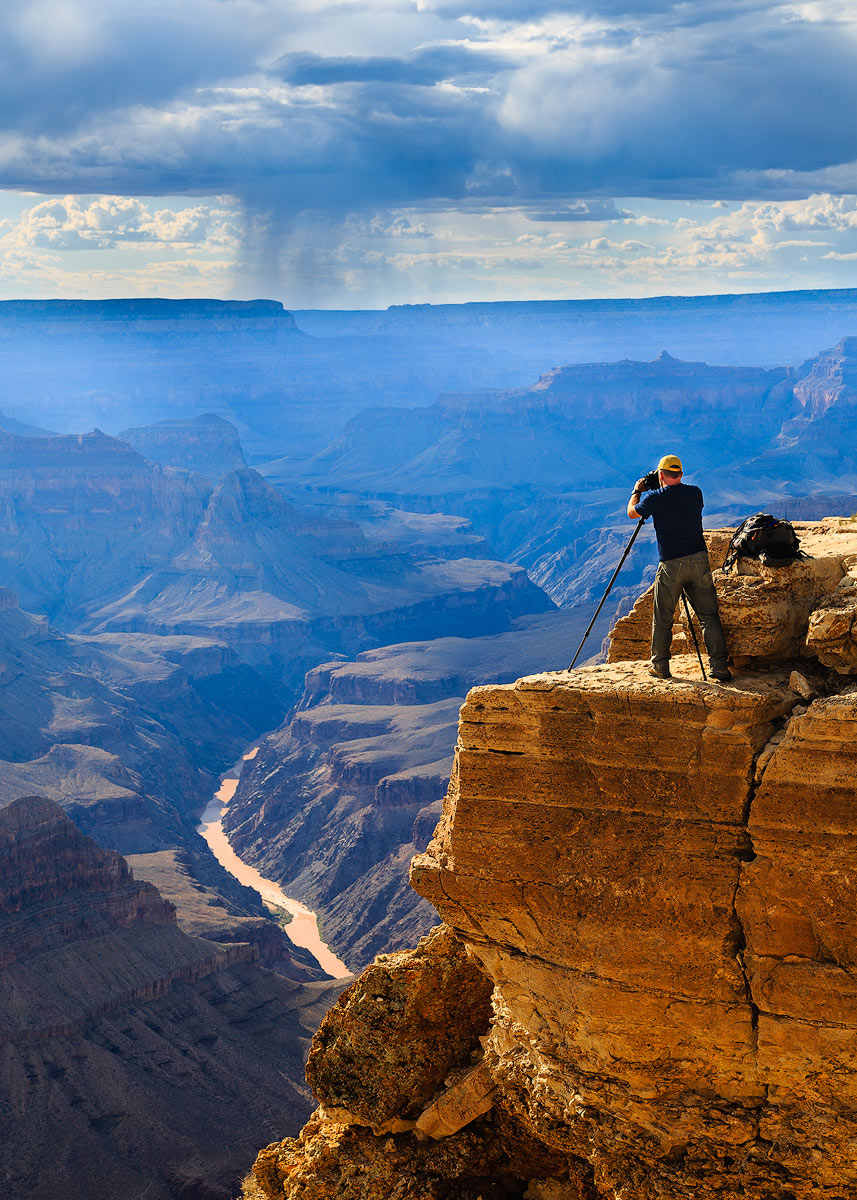
On the rim of the canyon. Photo courtesy Brian VanDenzen.
That guidance changed the way I photographed the canyon. Following it led me to a rarely visited section of the South Rim, where I made a photograph that would later become my first cover for Arizona Highways magazine—a moment that felt both improbable and deeply affirming.
Living in the Park
In March of 2009, I began my residency. That year, only three artists were selected out of over 300 applicants, and the program was managed directly by the National Park Service. I spent nearly a month living inside the park, housed in a small home within the employee housing area.
March is a fascinating time at the Grand Canyon. The first week or two are quiet, contemplative—snow lingering in the shadows, empty trails, long silences broken only by wind and ravens. Then, almost overnight, spring break arrives, and the park fills with energy and motion.

A late winter storm clears from Isis Temple in the Grand Canyon.
Living there offered a perspective few visitors ever experience. I spent hours exploring along the rim, making short hikes into the canyon, and taking in the historic architecture of Grand Canyon Village, along the way, photographing details and textures that echoed the park’s long human history. During the residency, I celebrated my 35th birthday and experienced a powerful winter storm that transformed the canyon into something ethereal and hushed.
Into the Canyon, Below the Rim
March of 2009 also marked my first time backpacking into the canyon. The director of the Artist-in-Residence program had arranged for me to have access to the Trailcrew bunkhouse at Phantom Ranch, located at the bottom of the canyon.
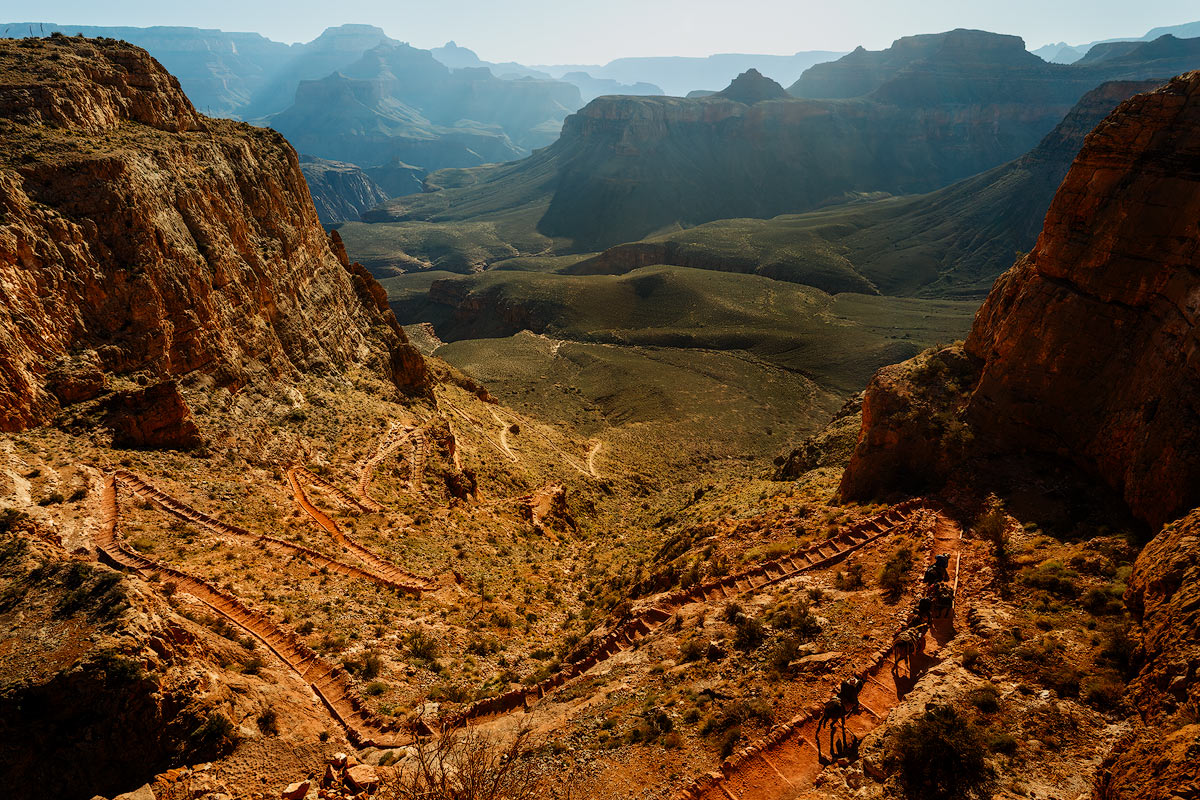
I left the South Rim via the South Kaibab Trail before sunrise, hiking into near white-out conditions. Five hours later, I stood at the bottom of the canyon in shirtsleeves and shorts, soaking my feet in Bright Angel Creek. Somewhere along the descent, the storm dissolved, clouds lifted, and warmth replaced winter—an experience that felt almost impossible to reconcile in a single day.
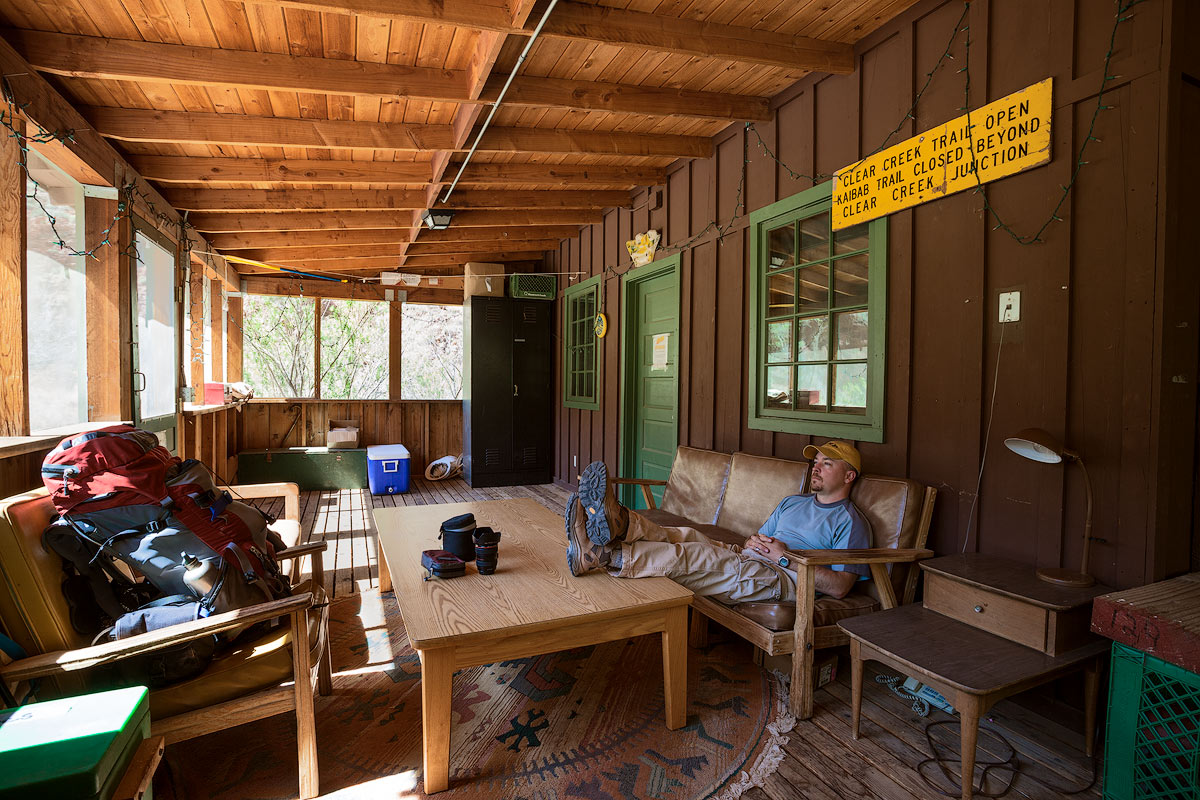
Relaxing in the Trailcrew Bunkhouse at Phantom Ranch.
The Park Service hosted me for several nights at the Trail Crew Bunkhouse at Phantom Ranch. The crew was working elsewhere in the canyon, leaving me alone in a place that normally buzzes with shared stories and muddy boots. I checked in with the rangers and spent time talking with the legendary volunteer ranger Sjors Horstman, who encouraged me to make the 12+ mile round-trip hike to Ribbon Falls.
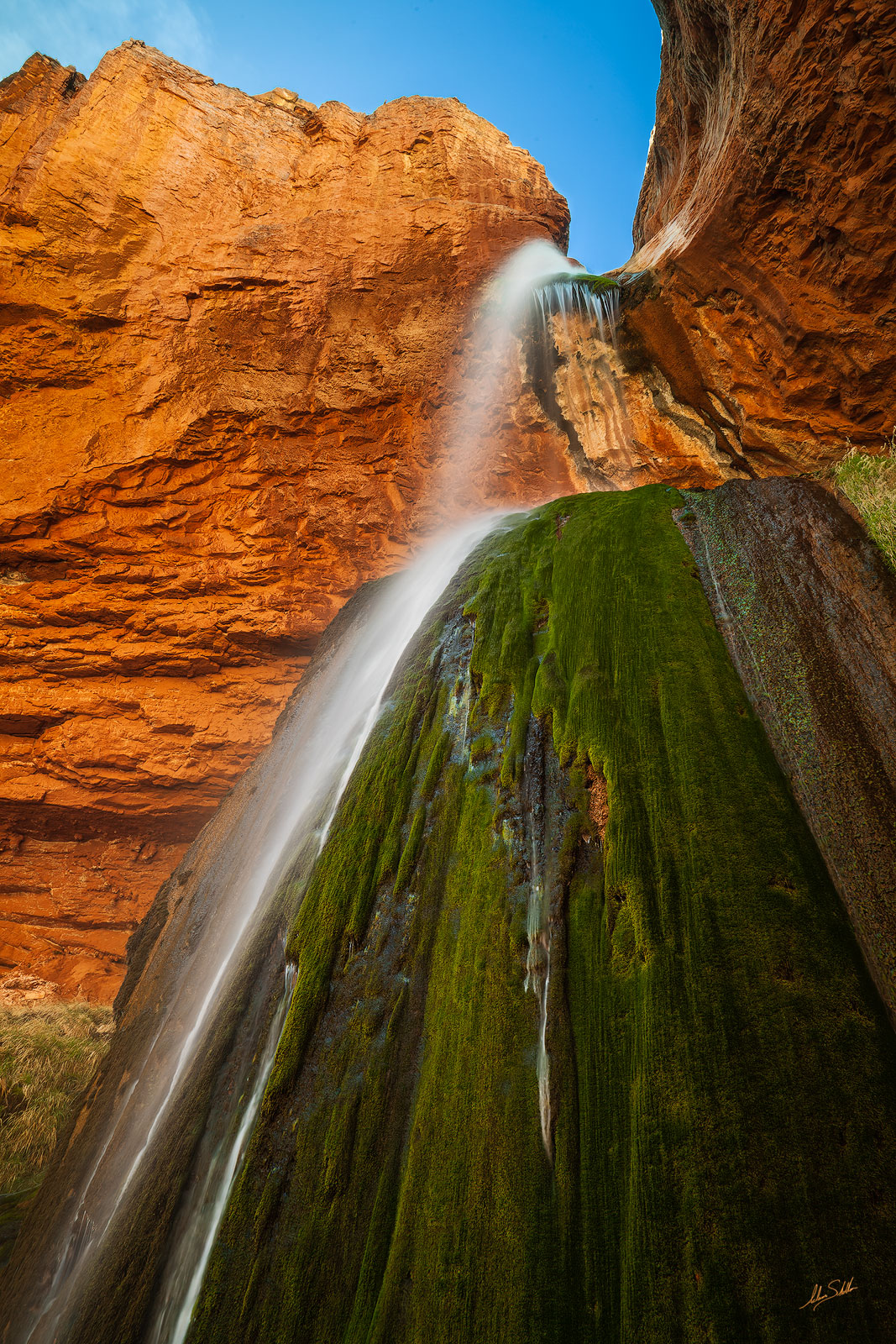
The double cascades of Ribbon Falls create an oasis in the desert.
On my first day, I stayed close to Phantom Ranch, content to explore the immediate surroundings. But the morning and the day before my hike out, Sjors’ encouraging words about the hike to Ribbon Falls returned to me.
I grabbed my camera, tripod, and pack—and ran out the door. Somewhere near Ribbon Falls, I realized I had made a mistake when I realized I’d forgotten water. On the return hike to Phantom Ranch, deep in The Box, dehydration began to set in. Although a clear stream ran beside the trail, without a filter in my pack, I chose caution over desperation. I moved slowly, thankful for downhill terrain and the forgiving temperatures of early spring.
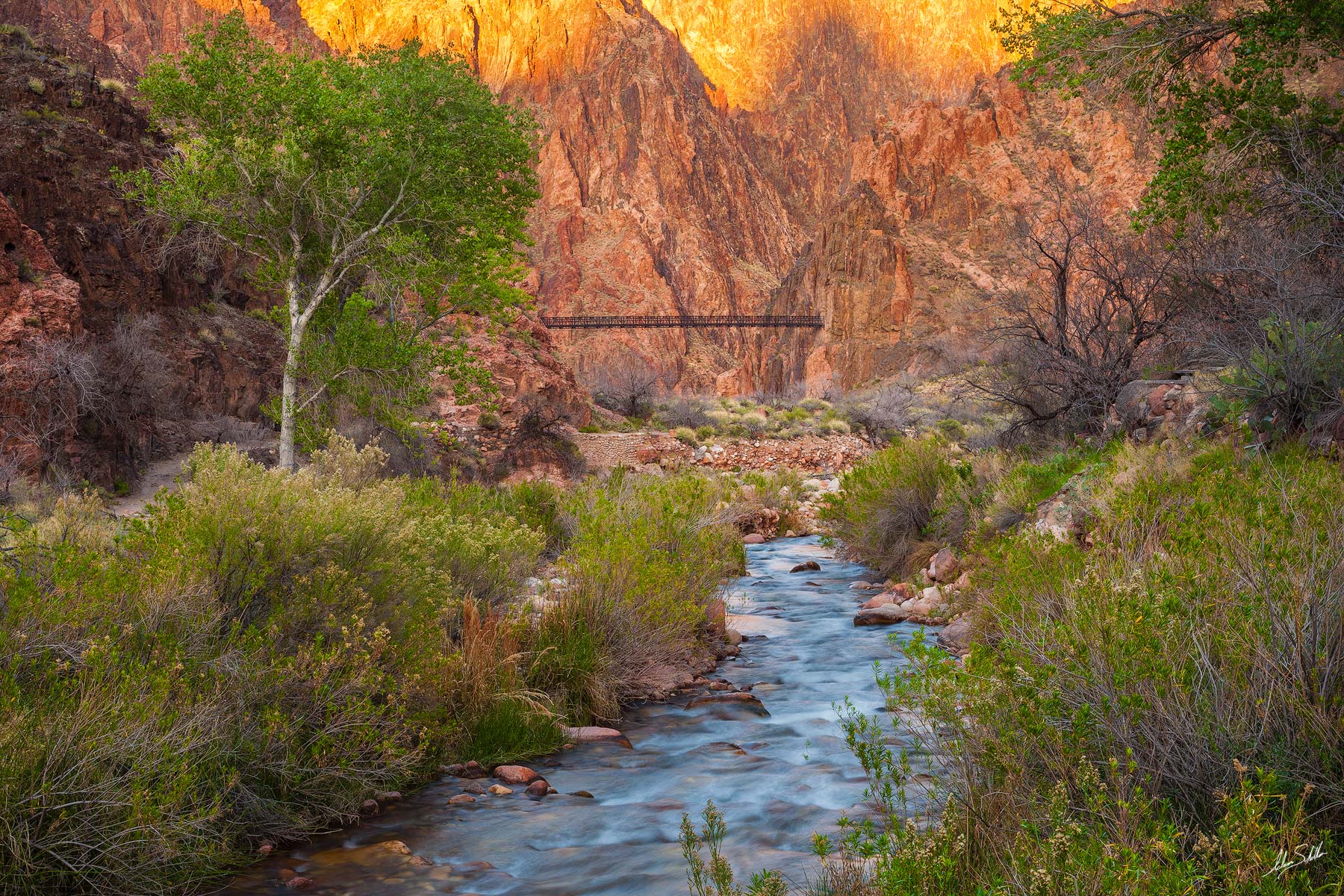
The cool waters of Bright Angel Creek flow swiftly towards the Black Bridge and the Colorado River.
That evening, after rest and water, I walked down to the Colorado River to photograph the Silver and Black Bridges. I sat quietly as the last light climbed the canyon walls—deep vermilion, rust red, ember orange, and soft rose alpenglow—listening to the water rushing past and feeling profoundly small and alive at the same time.
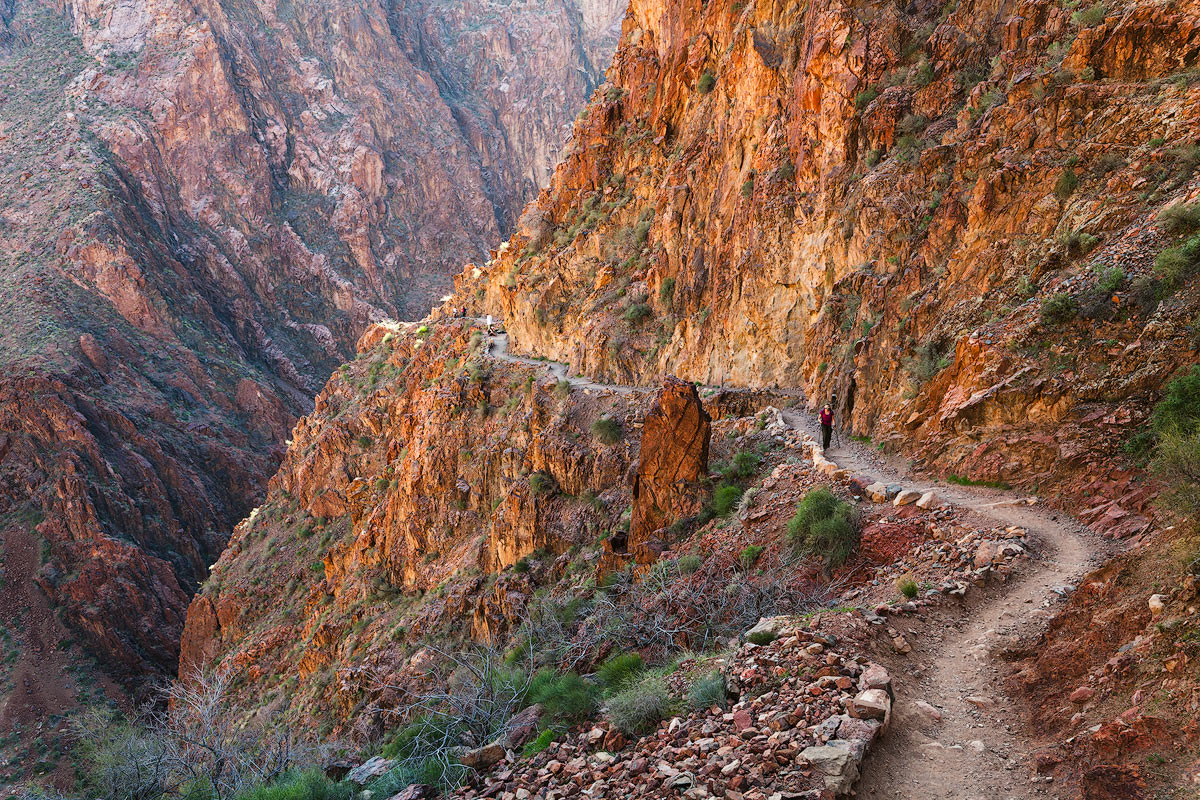
The next morning, I started up the Bright Angel Trail well before sunrise as I would be covering 9.3 miles back to the South Rim with an elevation gain of nearly 4,500 feet. I’ve never been a fast hiker, but I know my pace—and that steady rhythm carried me back to the rim. I may not have set a speed record, but I reached the top changed.
Finale: The Last Sunrise
On the final day of my Artist-in-Residence stay in March 2009, after nearly a month of early mornings and long hikes, I almost slept through what would become one of the most memorable photographs of my career. I had planned to rest, pack up, and then begin the long drive home—but waking before sunrise, I noticed clouds in the sky and knew I had one last moment to make something meaningful. Because I was an Artist-in-Residence, I could explore anywhere in the park, and without hesitation, I headed straight for Yaki Point.
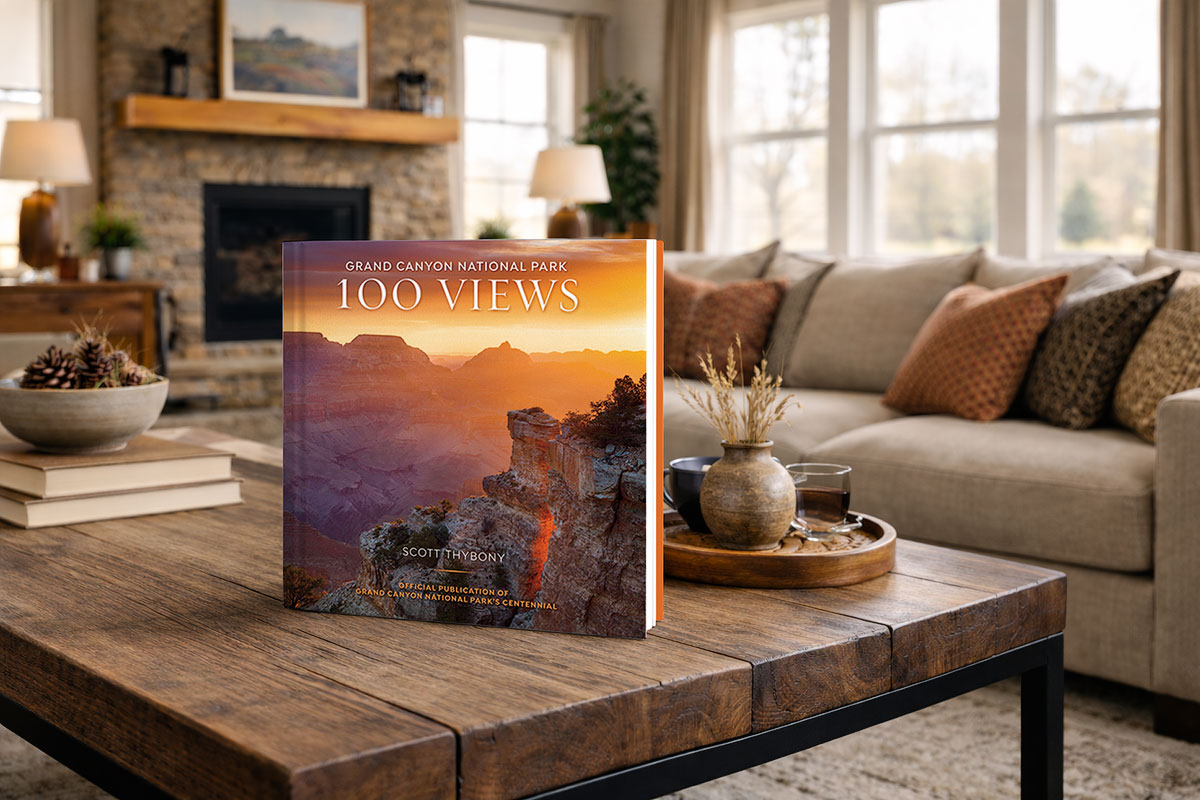
To celebrate Grand Canyon National Park's centennial, Grand Canyon Conservancy published this book with some really incredible images from some amazing photographers. I am incredibly grateful for the opportunity to have my work on the cover and to be forever part of the park's history.
As dawn broke, the sky began to glow with color and light that seemed to pour into the canyon itself. What began as a rushed moment became a twenty-minute display of reflected light and radiant hues that I will never forget. That image, titled Revelation, was the last I made as the Artist-in-Residence and later became part of the Grand Canyon Museum Collection, and it was featured on the cover of the park's Centennial book, Grand Canyon National Park 100 Views, authored by Scott Thybony and published by the Grand Canyon Conservancy.
That sunrise marked the close of one chapter and the beginning of another—of deeper relationships with the Grand Canyon, and a lifelong commitment to sharing the canyon’s stories through photography.
Returning to the Canyon
In March of 2010, I returned to the park to deliver and donate a framed 20x30-inch print of Revelation to the Grand Canyon National Park Museum Collection.
During that visit in March, the National Park Service invited me to return to the South Rim in July of 2010 to stay upstairs at Verkamp’s, affording me an opportunity to experience the canyon during monsoon season.
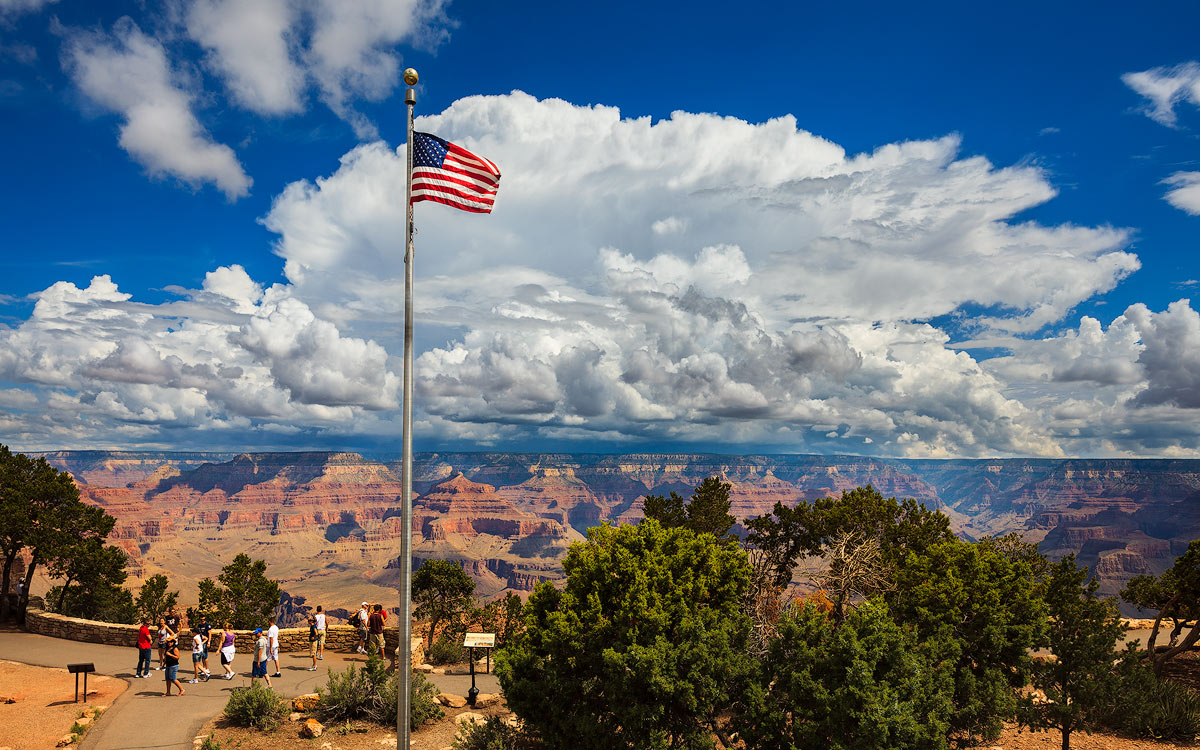
The view from the Verkamp's building.
Staying upstairs in the old family residence at Verkamp’s was an experience unto itself. The building is filled with character, and you can feel the lived history of the early settlers in its worn floors, creaking stairs, and quiet corners. It never felt like temporary lodging—it felt inhabited by stories. One of my favorite moments each day was stepping out onto the deck, looking past the American flag as it caught the breeze, and seeing the Grand Canyon stretching endlessly beyond. It was a daily reminder of how closely human history and this vast landscape are woven together.
Upstairs in Verkamp’s, there is a registry where artists leave a few words behind. In it, I wrote the following...

A Life Redirected
That statement has proven true in ways I could never have predicted.
The Artist-in-Residence experience didn’t just shape my photography—it reshaped my life. Within a year, I began offering photography workshops along the rim of Grand Canyon National Park, guiding others through the same process of slowing down, learning the light, and seeing beyond the obvious. A little over a year later, Sally and I moved to Flagstaff to be closer to the place that had quietly become the center of my world.
Today, my work continues to grow outward from that experience. In addition to my immersive photography workshops on both the South and North Rims, I guide multi-day photography expeditions rafting the Colorado River through the heart of the canyon. I speak regularly to photography clubs, conservation groups, and civic organizations about photography, public lands, and creative purpose.
My photographs have since been published in photography and travel magazines and in books, and my fine-art prints are held in private, corporate, and institutional collections—extending the stories of the canyon far beyond its rim.
I continue to volunteer each year with Parks in Focus, a commitment that began during my July 2010 residency on the South Rim. Through this work, I help young people experience the power of seeing our public lands through a camera—and to share their own view of the world.
The Grand Canyon continues to pull me in—season after season, year after year—not as a subject to conquer, but as a place to listen, learn, and return to. What began as a month-long residency became a lifelong relationship, one that still guides my work, my teaching, and my sense of purpose as a Grand Canyon Photographer.
The Program Today
Today, the Artist-in-Residence program at Grand Canyon National Park is administered by the Grand Canyon Conservancy, continuing a long tradition of inviting artists into the park to interpret and share its stories and their own. In addition to the Artist-in-Residence program, the Conservancy also offers an Astronomer-in-Residence program—recognizing the Grand Canyon not only as a place of extraordinary landscapes, but as one of the most remarkable night-sky environments in the world.
Together, these programs help ensure that the canyon continues to be explored, understood, and shared through both creative vision and scientific curiosity. To learn more about the current residency programs—or to support the work they make possible—visit the Grand Canyon Conservancy.