
What Will I Learn in a Photography Workshop?
Whether you're just beginning your photography journey or you're an experienced photographer looking to refine your skills, my workshops are designed to help you become a more confident, capable, and creative photographer.
My approach to teaching goes beyond camera settings and technical instruction. While understanding your equipment is essential, making meaningful photographs requires much more. It's about learning to recognize light, see compositions, simplify complex scenes, and make thoughtful decisions about what belongs in your frame—and what doesn't.
Every photographer arrives with different experiences, strengths, and goals. My instruction is tailored to your individual skill level, with an emphasis on practical, hands-on learning in the field.
Below are some of the skills and concepts we may explore during a workshop, organized by experience level.
1. Technical Skills: Mastering Your Camera
Understanding the technical aspects of photography gives you the freedom to concentrate on creativity. The goal isn't simply to learn camera settings, but to understand how those settings influence the appearance and emotional impact of your photographs.
Beginner: Building a Strong Foundation
Learn to take control of your camera and move beyond automatic settings.
- Understanding exposure: Learn how aperture, shutter speed, and ISO work together to control exposure.
- Camera controls: Become comfortable navigating your camera's menus, buttons, and essential settings.
- Focusing techniques: Learn how to select focus points and achieve sharp, well-focused images.
- Depth of field: Understand how aperture and focal length influence how much of a scene appears sharp.
- Reading the histogram: Learn to evaluate exposure using your camera's histogram rather than relying solely on the LCD preview.
- Shooting in RAW: Understand the advantages of RAW files and how they provide greater flexibility when processing your photographs.
Intermediate: Developing Technical Confidence
Build on the fundamentals and learn to handle more challenging photographic situations.
- Advanced exposure control: Learn to expose for highlights and shadows in high-contrast scenes.
- Exposure bracketing: Capture multiple exposures to preserve detail throughout a scene's tonal range.
- Hyperfocal distance: Learn techniques for maximizing depth of field in landscape photography.
- Focus bracketing and stacking: Capture multiple images at different focus distances to achieve front-to-back sharpness.
- Using photographic filters: Understand when and how to use polarizing and neutral-density filters.
- Long-exposure photography: Use shutter speed creatively to convey movement in water, clouds, and other elements.
- Evaluating image sharpness: Understand the relationships between aperture, diffraction, shutter speed, and camera stability.
Advanced: Refining Technical Precision
Develop the technical judgment to solve difficult photographic problems and execute more sophisticated creative ideas.
- Complex exposure strategies: Manage extreme dynamic range while maintaining natural-looking tonal relationships.
- Advanced focus stacking: Address challenging foreground-to-background relationships, subject movement, and stacking artifacts.
- Technical problem-solving: Adapt quickly to changing light, weather, and shooting conditions.
- Advanced filter techniques: Combine filtration and exposure control to achieve specific visual effects.
- Optimizing image quality: Make informed decisions about lens performance, diffraction, depth of field, and sensor limitations.
- Intentional technical choices: Know when maximum sharpness, perfect exposure, or conventional techniques should take a back seat to creative expression.
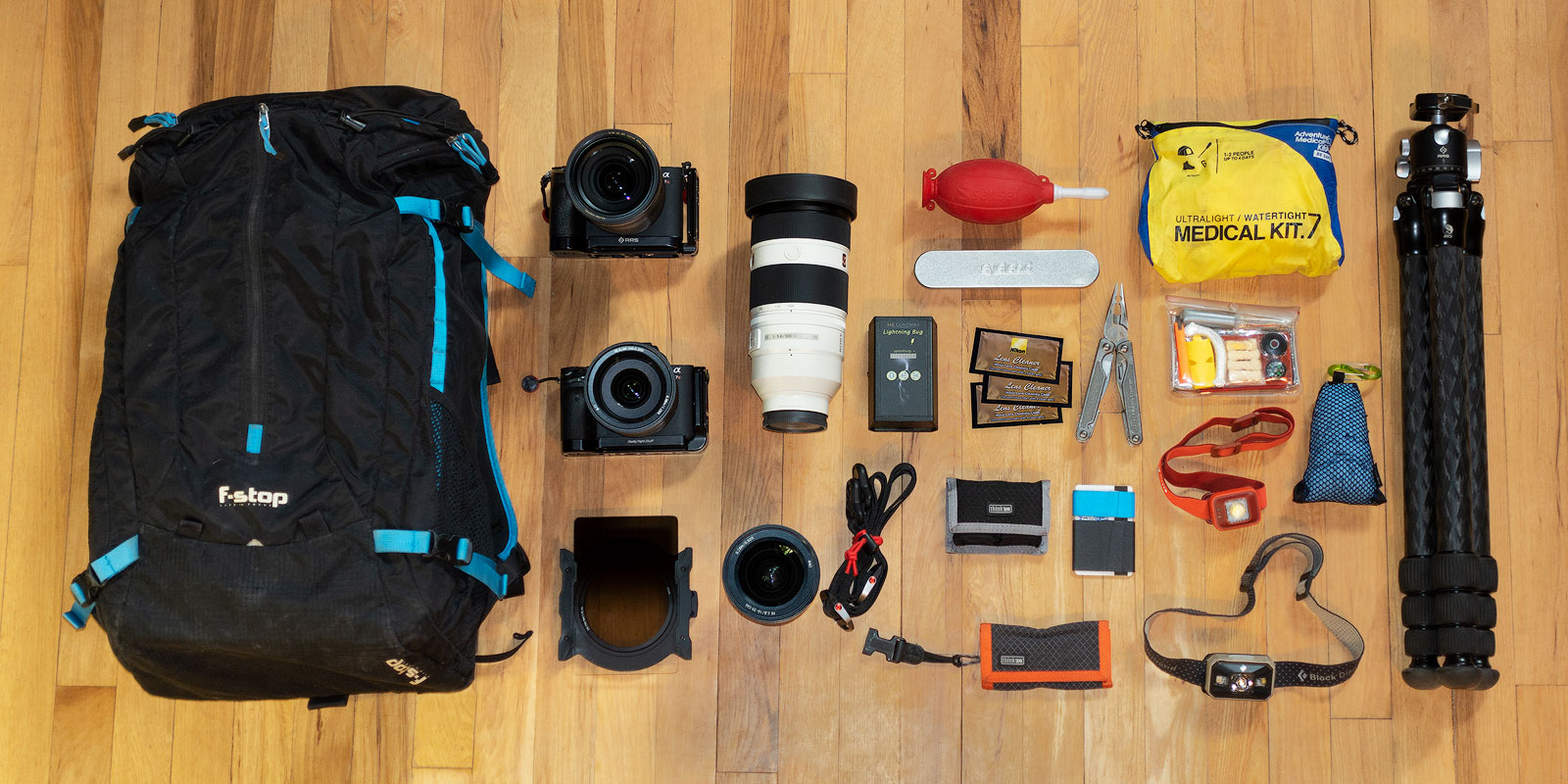
2. Working Efficiently with Your Camera Gear
Great photography isn't about owning the most equipment. It's about understanding what you have, choosing the right tools for the job, and working efficiently so that your attention stays on the landscape rather than inside your camera bag.
Beginner: Getting Comfortable with Your Equipment
Learn what equipment you actually need and how to use it confidently.
- Essential camera gear: Understand the purpose of different lenses, tripods, filters, and accessories.
- Choosing lenses: Learn the differences between wide-angle, standard, and telephoto lenses.
- Packing your camera bag: Organize your equipment for accessibility, comfort, and protection.
- Tripod fundamentals: Learn when a tripod is beneficial and how to set it up correctly.
- Basic equipment care: Protect your camera and lenses from dust, moisture, and changing weather conditions.
- Developing a routine: Establish a simple, repeatable process for preparing your camera before heading into the field.
Intermediate: Becoming More Efficient in the Field
Learn to carry less, work faster, and make better equipment choices.
- Choosing the right lenses: Understand how focal length affects perspective, framing, and the relationships between visual elements.
- Reducing unnecessary gear: Evaluate what you actually use and what can be left behind.
- Efficient camera bag organization: Arrange your equipment to minimize unnecessary lens changes and missed opportunities.
- Working in changing conditions: Adapt your setup to wind, rain, dust, and rapidly changing light.
- Developing a field workflow: Establish an efficient sequence for evaluating a scene, choosing equipment, composing, and capturing an image.
- Anticipating photographic opportunities: Prepare for changing conditions rather than reacting after the moment has passed.
Advanced: Simplifying Your Process
Develop a highly efficient approach that allows you to work intuitively and remain fully engaged with your surroundings.
- Purpose-driven equipment selection: Choose a minimal, effective kit based on the location, conditions, and photographic objectives.
- Working with limitations: Learn how restricting your equipment choices can encourage more creative thinking.
- Anticipating lens selection: Recognize photographic possibilities before reaching for a different lens.
- Balancing weight and capability: Make practical equipment decisions for extended hikes, remote locations, and challenging terrain.
- Streamlining complex techniques: Execute exposure bracketing, focus stacking, and other technical processes efficiently.
- Making equipment secondary: Develop enough familiarity with your tools that operating the camera becomes almost instinctive.

3. Designing a Composition
Composition is more than following rules. It's the process of organizing visual elements to create structure, establish relationships, guide the viewer's eye, and communicate what attracted you to a scene in the first place.
Beginner: Learning to Build Strong Compositions
Develop an understanding of how visual elements work together within the frame.
- Fundamentals of composition: Explore balance, visual weight, the rule of thirds, and the placement of subjects.
- Finding a clear subject: Learn to identify what makes a scene interesting and build a composition around it.
- Foreground, middle ground, and background: Understand how layers can create a sense of depth.
- Leading lines: Recognize natural lines and shapes that guide the viewer through a photograph.
- Choosing your perspective: Discover how changing camera height and position can dramatically alter a composition.
- Paying attention to the edges: Learn to recognize distracting elements before pressing the shutter.
Intermediate: Creating More Intentional Compositions
Move beyond basic compositional guidelines and begin making more deliberate visual choices.
- Working with layers: Arrange foreground, middle-ground, and background elements to create depth and visual relationships.
- Strong foreground elements: Learn when foreground subjects strengthen a composition and when they become distractions.
- Using lines, shapes, and patterns: Recognize the underlying visual structure of a landscape.
- Controlling visual balance: Work with color, contrast, texture, and subject placement to create visual harmony or tension.
- Managing the horizon and sky: Recognize when the sky contributes to the photograph and when minimizing or eliminating it creates a stronger composition.
- The art of subtraction: Simplify a scene by eliminating elements that compete with the primary subject.
- Choosing focal length intentionally: Understand how wide-angle and telephoto lenses influence the apparent relationships between elements.
Advanced: Developing a Personal Compositional Style
Learn to approach composition as a form of visual expression rather than a collection of rules.
- Visual hierarchy: Control where the viewer looks first and how their attention moves through the photograph.
- Complex layered compositions: Organize multiple subjects, shapes, and spatial relationships without creating confusion.
- Working with negative space: Use empty or understated areas to create balance, tension, or a sense of scale.
- Advanced simplification: Reduce a scene to its most meaningful elements while preserving its emotional character.
- Composing with relationships: Explore how the placement and interaction of visual elements can suggest a larger story.
- Breaking compositional conventions: Recognize when an unconventional composition is more compelling than a technically balanced one.
- Developing visual consistency: Identify recurring compositional choices that help define your photographic voice.
4. Learning to See Creatively
Perhaps the most important skill a photographer can develop is the ability to see beyond the obvious.
Great photographs often begin with recognizing something that others overlook: a fleeting quality of light, a subtle relationship between shapes, an interesting shadow, or the way atmosphere transforms an otherwise ordinary landscape.
Beginner: Learning to Recognize Photographic Opportunities
Develop greater awareness of light and the visual possibilities around you.
- Seeing the light: Learn to recognize the differences between direct, diffused, reflected, and backlighting.
- Understanding the direction of light: Explore how front, side, and backlighting change the appearance of a subject.
- Recognizing shadows: Discover how shadows reveal form, create depth, and contribute to a composition.
- Observing color and contrast: Learn how changing light affects color, texture, and mood.
- Looking beyond the obvious: Begin noticing smaller scenes and details within a larger landscape.
- Slowing down: Develop the habit of observing and exploring a location before setting up your camera.
Intermediate: Using Light and Atmosphere Creatively
Learn to recognize and anticipate conditions that can transform an ordinary scene into an extraordinary photograph.
- Working with dramatic light: Recognize opportunities created by changing weather, passing clouds, and directional sunlight.
- Using shadows as compositional elements: Treat shadows as important shapes rather than simply dark areas of a photograph.
- Photographing atmosphere: Use fog, mist, haze, dust, smoke, and weather to create depth, separation, and mood.
- Recognizing reflected light: Learn to identify subtle illumination that can be more compelling than direct sunlight.
- Seeing in black and white: Recognize scenes where form, texture, contrast, and tonal relationships matter more than color.
- Anticipating the light: Learn to evaluate how a scene may change as the sun moves or weather conditions evolve.
- Finding photographs within photographs: Look beyond the grand landscape to discover intimate scenes, abstract patterns, and unexpected visual relationships.
Advanced: Creating Photographs with Greater Meaning
Move beyond documenting what a place looks like and explore how to communicate what it feels like.
- Interpreting light: Use light not simply to illuminate a subject, but to establish mood, emphasize relationships, and shape visual meaning.
- Embracing shadows and darkness: Explore how withholding information can create mystery, tension, and emotional depth.
- Seeing subtlety: Recognize the photographic potential of quiet light, muted colors, understated subjects, and seemingly ordinary conditions.
- Using atmosphere as a storytelling element: Create photographs that communicate scale, isolation, movement, or a sense of place.
- Moving beyond literal representation: Explore abstraction, ambiguity, and unconventional interpretations of familiar subjects.
- Developing a personal vision: Recognize the subjects, visual relationships, and qualities of light that consistently attract your attention.
- Photographing with intention: Make creative decisions based on what you want a photograph to communicate rather than simply what is in front of your camera.
Do I Need to Be at a Certain Skill Level to Attend?
Not at all. Photographers of different experience levels can benefit from working together in the field, and I adapt my instruction to each participant's needs and interests.
If you're a beginner, we'll concentrate on developing a strong foundation and helping you feel more comfortable with your equipment. If you're an intermediate photographer, we'll work on improving your technical consistency and strengthening your compositional decisions. And if you're an advanced photographer, we'll focus on refining your creative approach, solving more complex challenges, and developing your personal vision.
These categories aren't rigid. You might be highly proficient with your camera but want help with composition, or have a strong creative eye while still learning more advanced technical techniques.
My goal is to meet you where you are as a photographer and help you move forward.
What Is the Most Important Thing I'll Learn?
While technical proficiency and a solid understanding of composition are essential, I believe the most valuable skill a photographer can develop is learning to see.
It's easy to become preoccupied with camera settings, equipment, and the pursuit of dramatic locations. But meaningful photography comes from curiosity, careful observation, and the ability to recognize possibilities that aren't immediately apparent.
I want you to leave a workshop with more than a collection of photographs. I want you to take home a better understanding of your camera, a more thoughtful approach to composition, and, most importantly, a new way of seeing the world around you.