
Exploring Parashant
A couple of months ago, I had the opportunity to spend nearly two weeks exploring Grand Canyon-Parashant National Monument. Parashant is located in what is known as the ‘Arizona Strip’, the area north of the Colorado River. This area is incredibly remote, wild, and absolutely beautiful. The terrain ranges from just a couple of thousand feet above sea level to over 8,000 feet. This allows for a wide variety of ecosystems to exist within the Parashant, creating some unique challenges for those who explore it. During my time there, the temperature ranged from the mid-90s to below freezing, and on my last morning, I awoke to find my tent covered in ice and snow.
During my time in Parashant, I photographed as much of the landscape as possible, from Whitmore Overlook, where you are one thousand feet above the Colorado River, to Snap Point, the westernmost overlook in the Grand Canyon. I also made it to Kelly Point, considered one of the most remote points in the Grand Canyon, located at the end of a very long and challenging 4x4 road. The roads in Parashant are not to be taken lightly. There are no paved roads, no visitor services, and you must be self-reliant and prepared to handle any situation you encounter.

An ocotillo with its flowers blooming. In the distance is the Colorado River with sunbeams piercing the depths of the Grand Canyon. From Whitmore Overlook in Grand Canyon-Parashant National Monument.
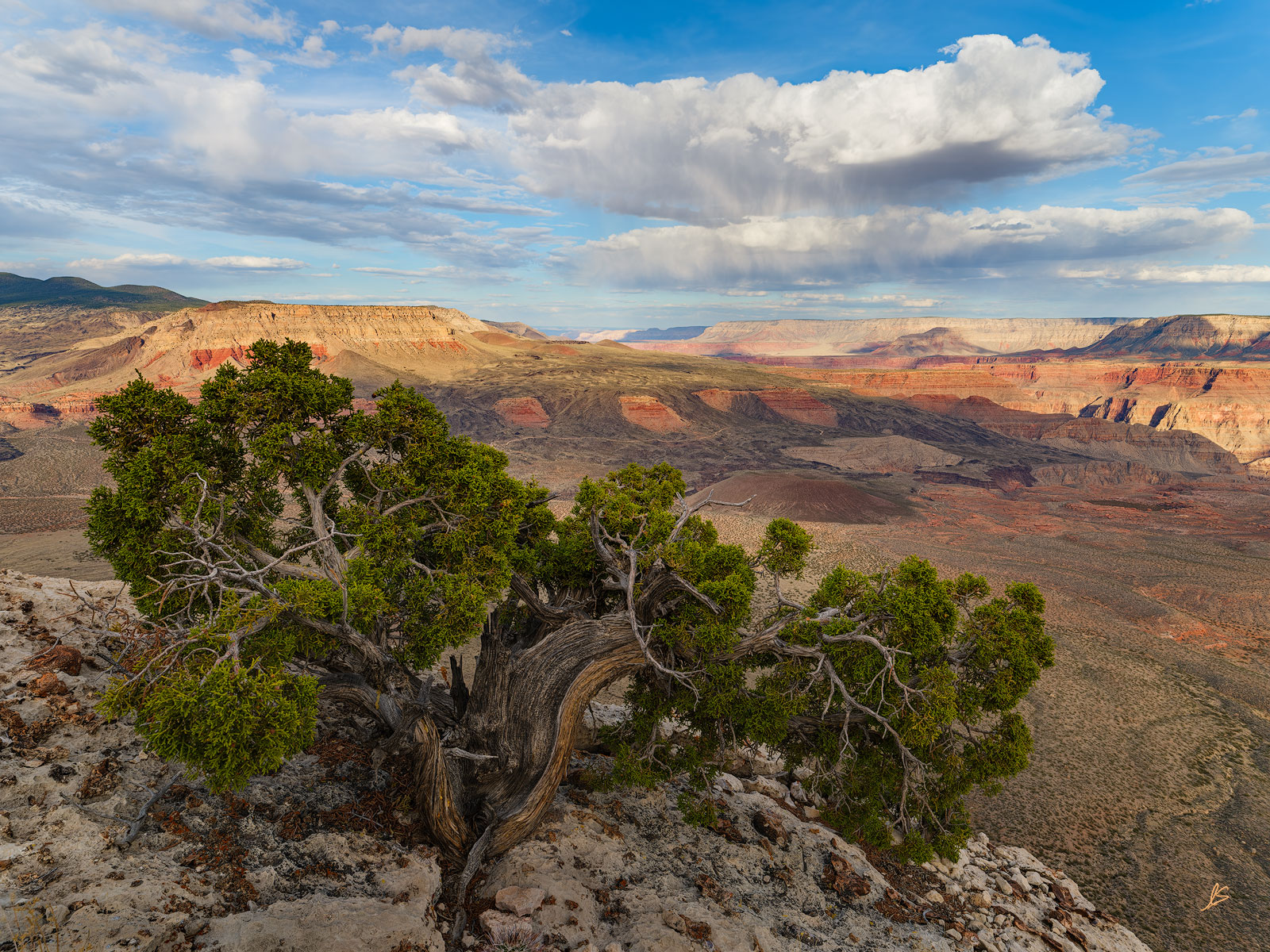
A lone juniper on the edge of a bluff overlooking Grand Canyon-Parashant National Monument in Arizona.
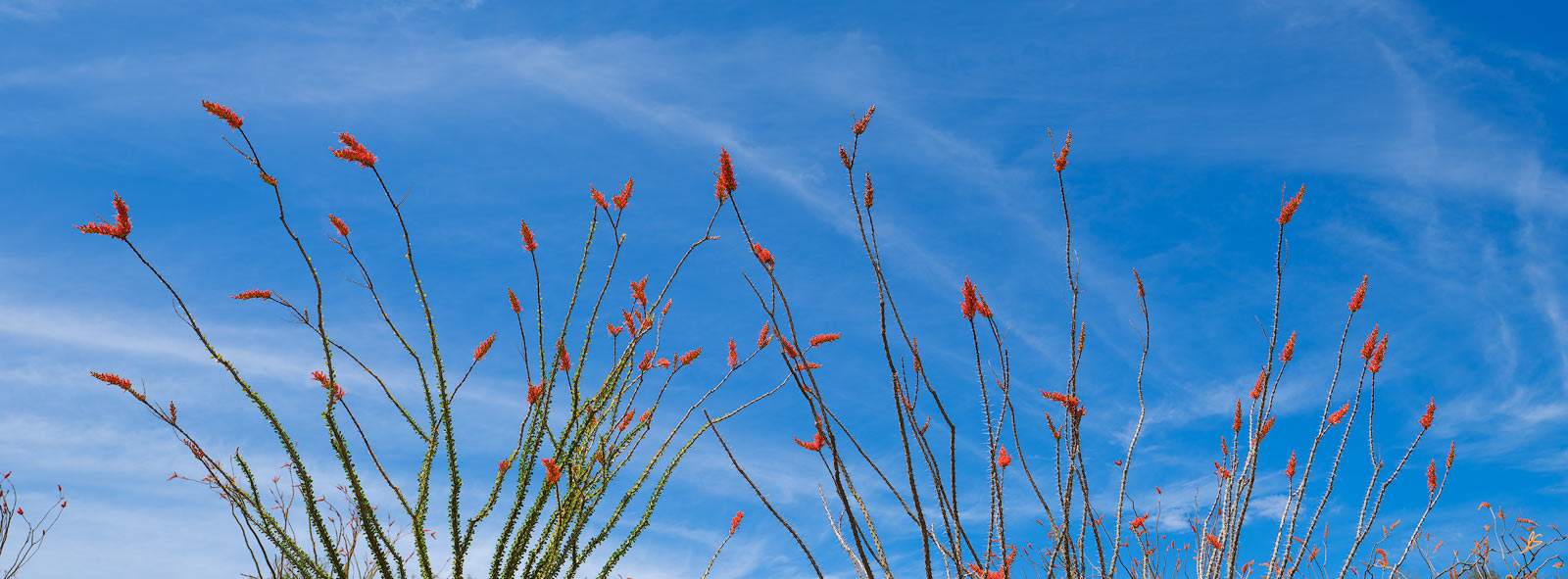
The red flowers of an ocotillo contrast against the deep blue of the Arizona sky over Grand Canyon-Parashant National Monument.
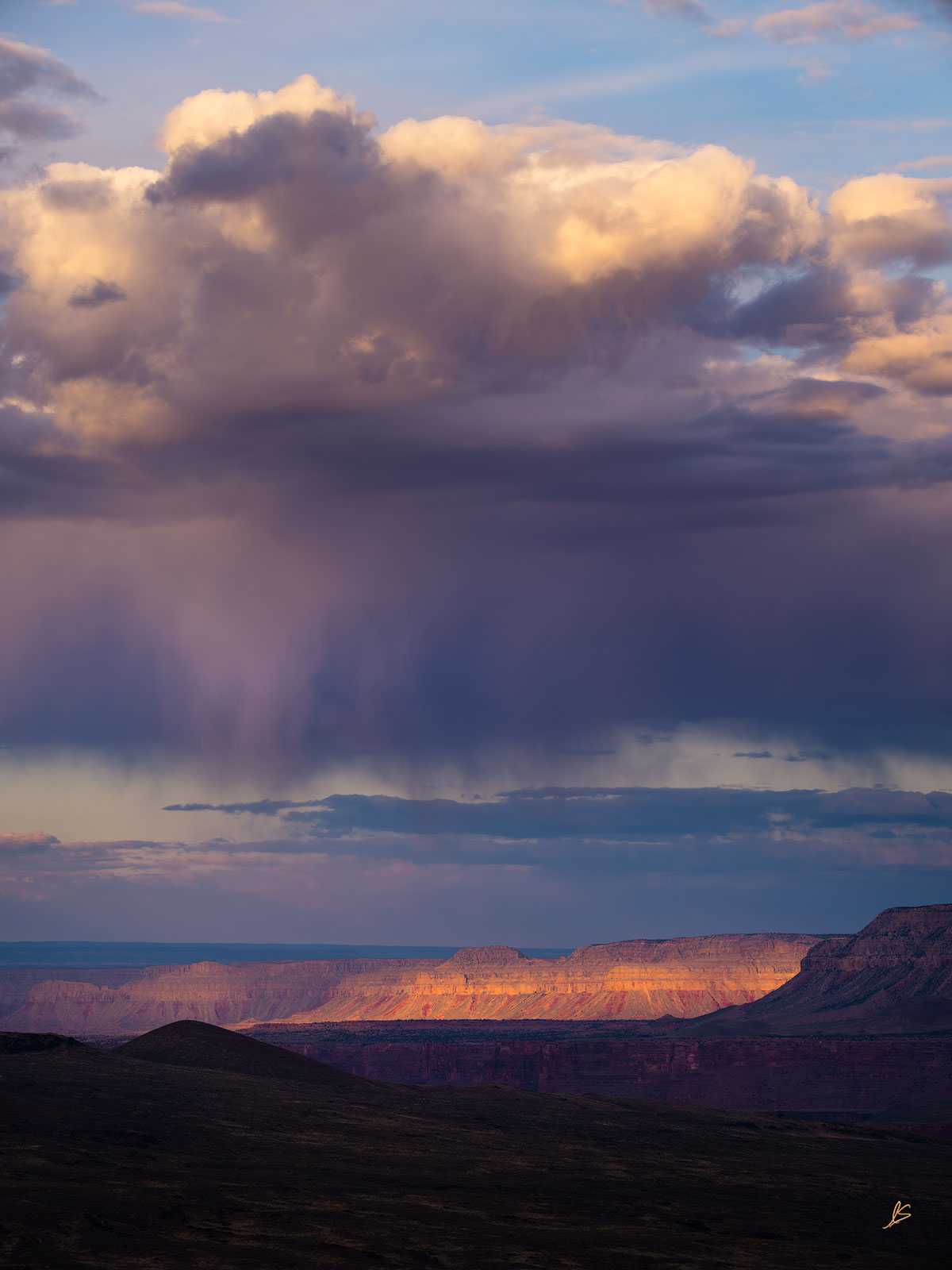
A touch of sunlight breaks through a clearing storm illuminating distant cliffs. From Whitmore Point in Grand Canyon-Parashant National Monument.
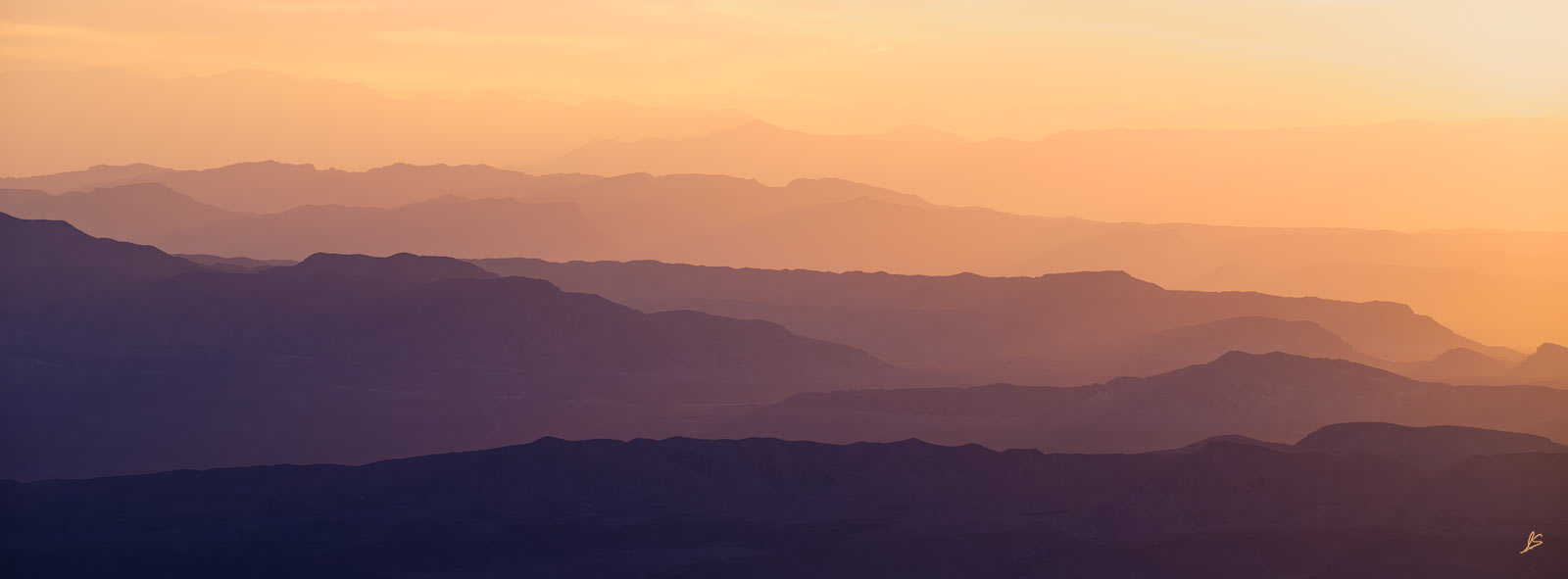
A panoramic view looking west from Hudson Point in Grand Canyon-Parashant National Monument at sunset.
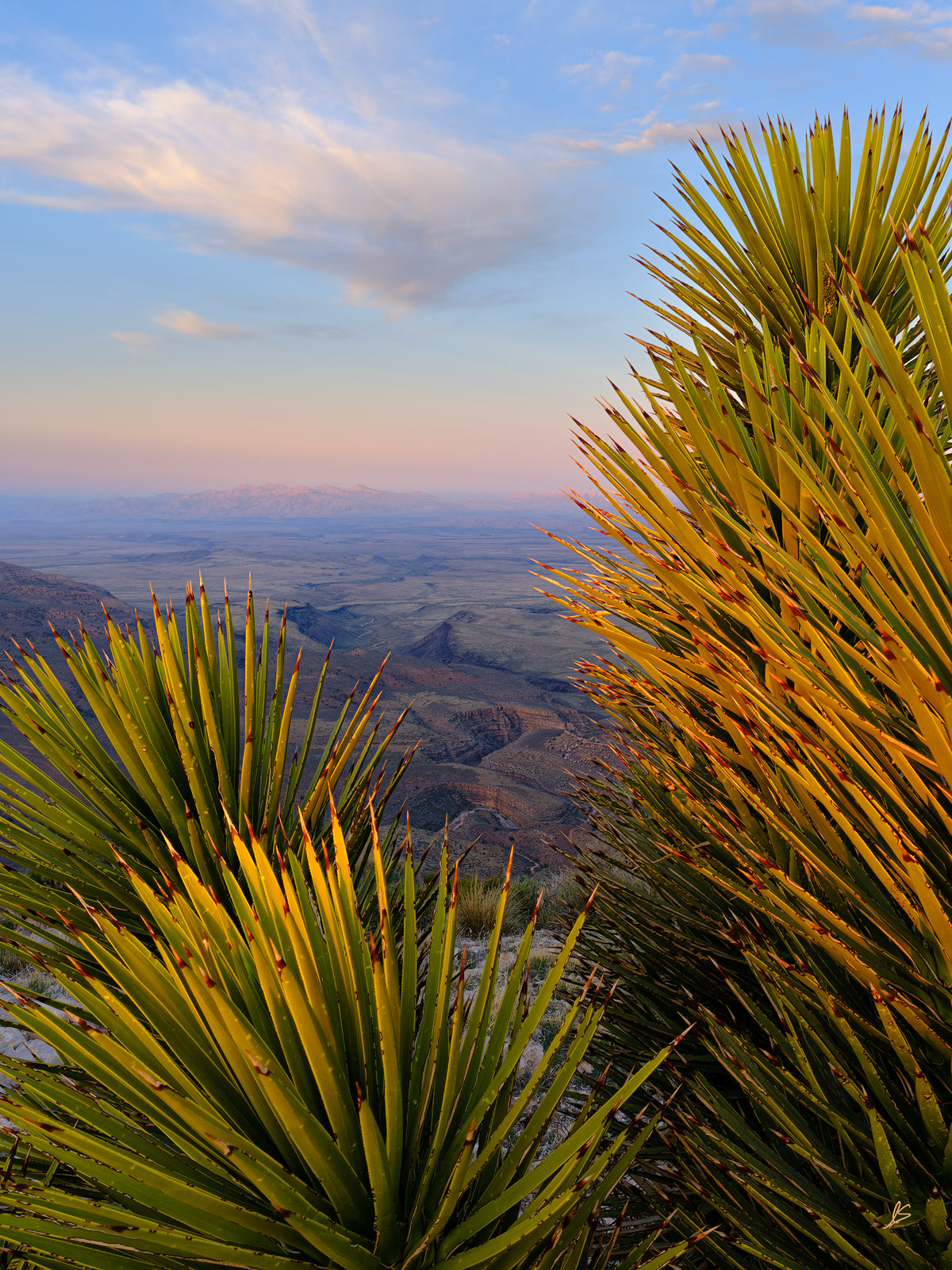
Joshua trees at Tweeds Points in Grand Canyon-Parashant National Monument on the Arizona Strip.
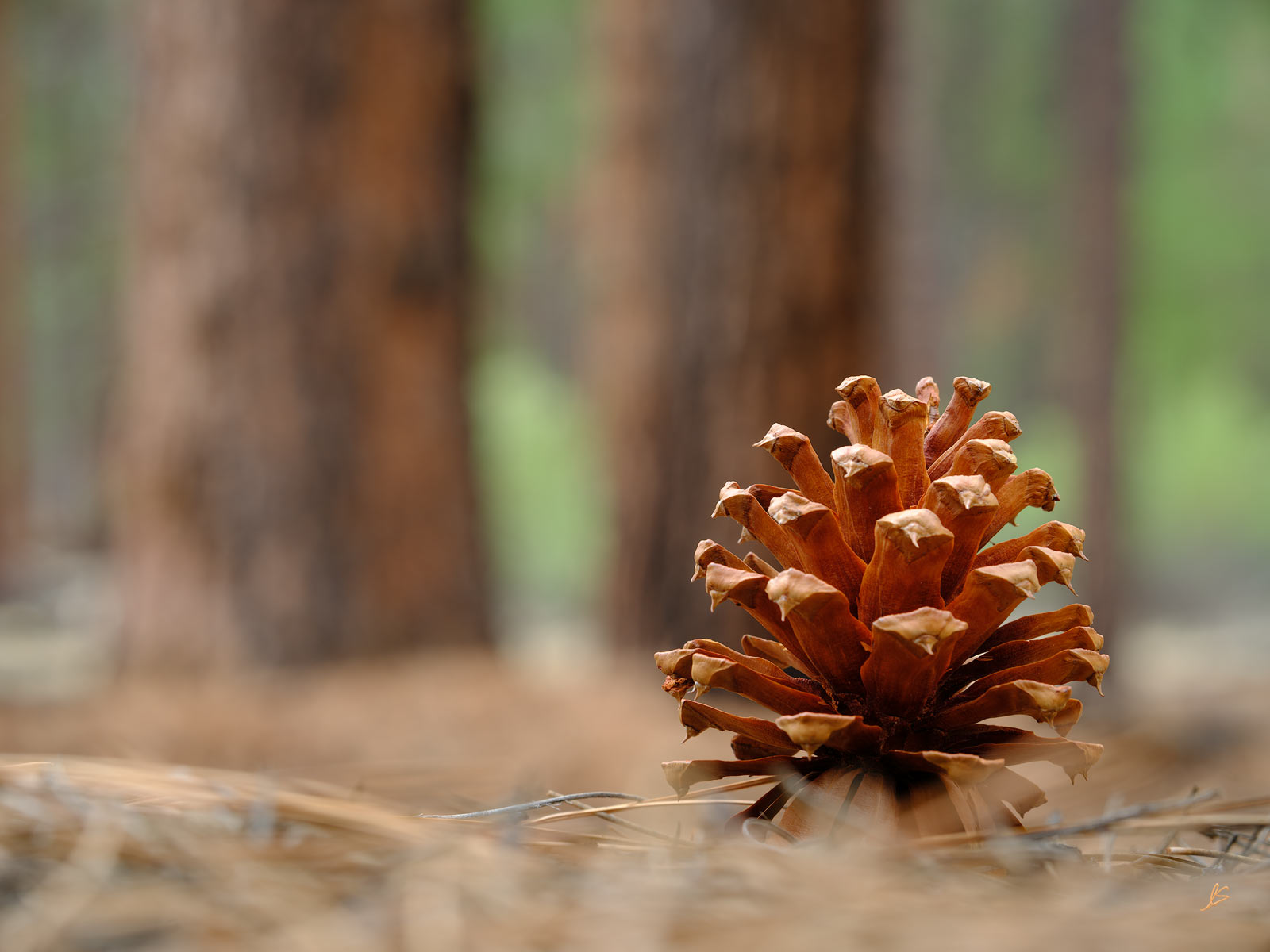
Beneath the towering ponderosa canopy, a single pine cone rests among fallen pine needles—unassuming, yet full of quiet significance. Once part of the living tree above, it now lies grounded, its spiraled form intact, a vessel of memory and renewal. The air is still, scented with warm bark and earth, and the forest feels as if it is pausing to breathe. This small cone speaks of cycles: of growth, release, and return. In a land defined by vast canyons and deep time, it reminds us that life’s continuity is just as present in the soft places beneath our feet.
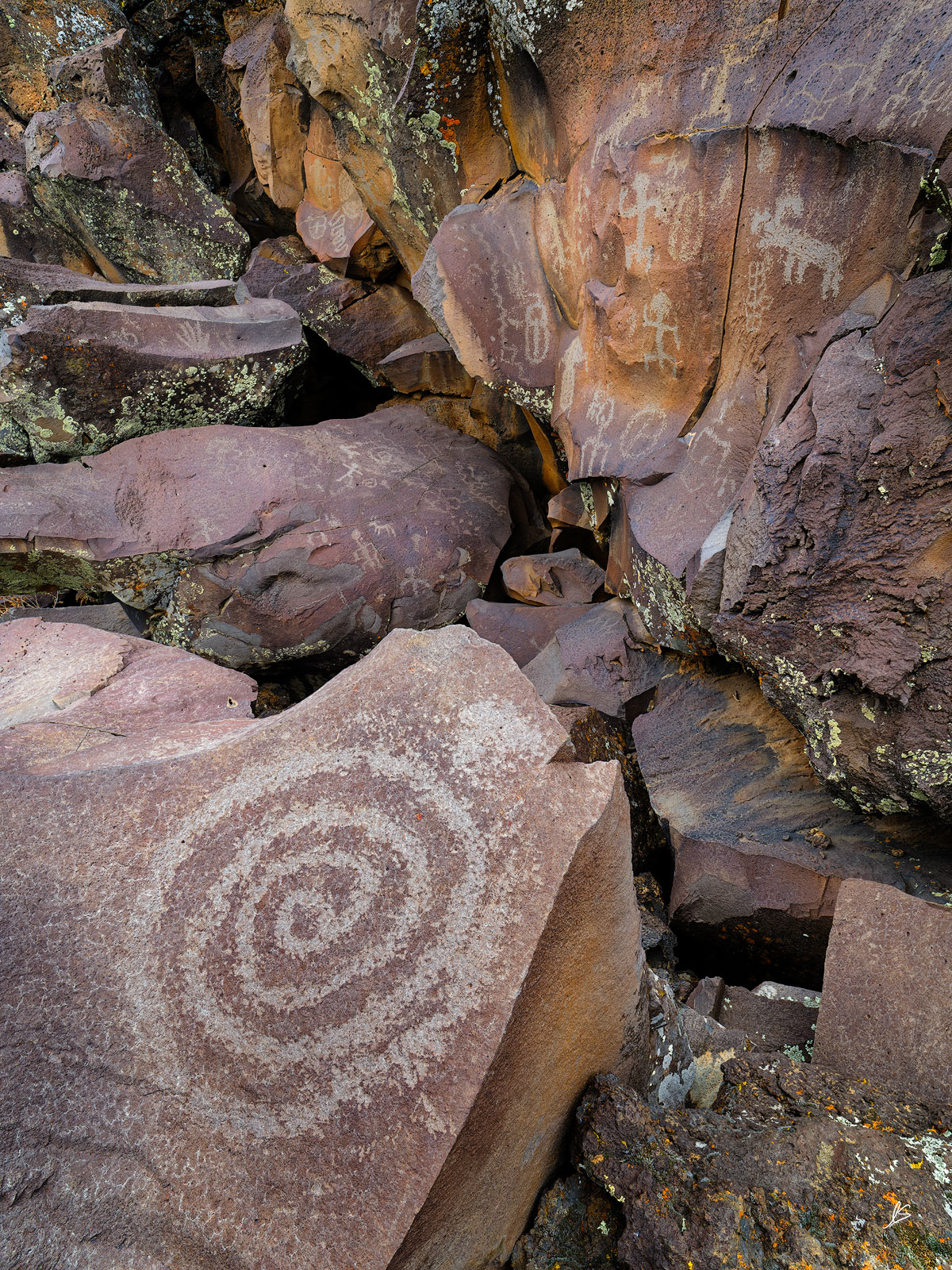
Carved into a boulder, the spiral petroglyph at Nampaweap may represent far more than a simple design—it is a symbol rich with meaning across many Indigenous traditions of the Southwest. Often associated with the cyclical patterns of nature, the spiral can signify migration routes, the movement of the sun across the sky, or the journey of the soul between worlds. At Nampaweap, a sacred site dense with ancient markings, the spiral may speak of time that turns rather than ends, of ceremony tied to solstices or the turning of seasons, or of a spiritual pathway that connects land, sky, and story. Set against the enduring silence of the area, this symbol becomes a point of continuity—etched not only in stone, but in memory, tradition, and reverence for place.
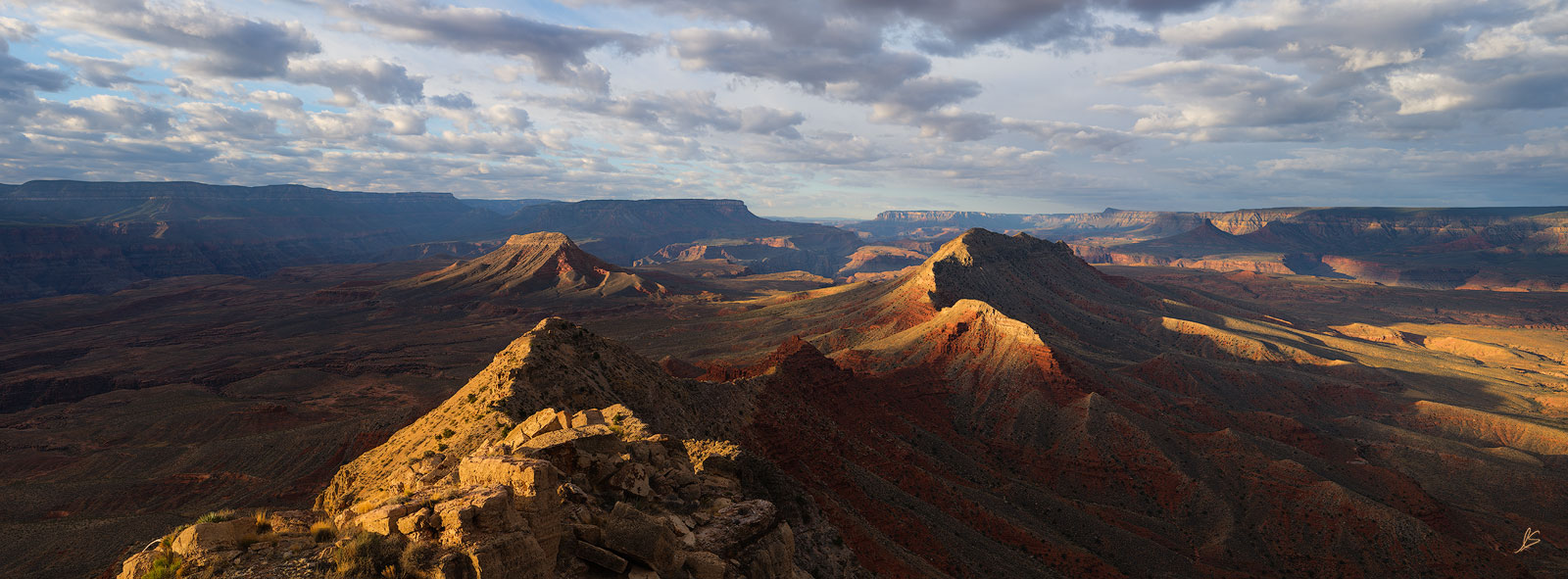
From Parashant Point, the land falls away into one of the most breathtaking and remote expanses of the Grand Canyon, where silence, scale, and time converge. This panoramic view reveals a sweeping tapestry of shadow and light—an ancient landscape sculpted by the Colorado River and exposed by millennia of erosion. Unlike more visited viewpoints, Parashant Point offers a rare sense of solitude and an unfiltered connection to the Earth’s geologic history, far from roads, crowds, or noise. In this image, the grandeur is not just in the vastness, but in the way the canyon draws the eye inward and outward at once, toward the depths of time and the stillness of presence.
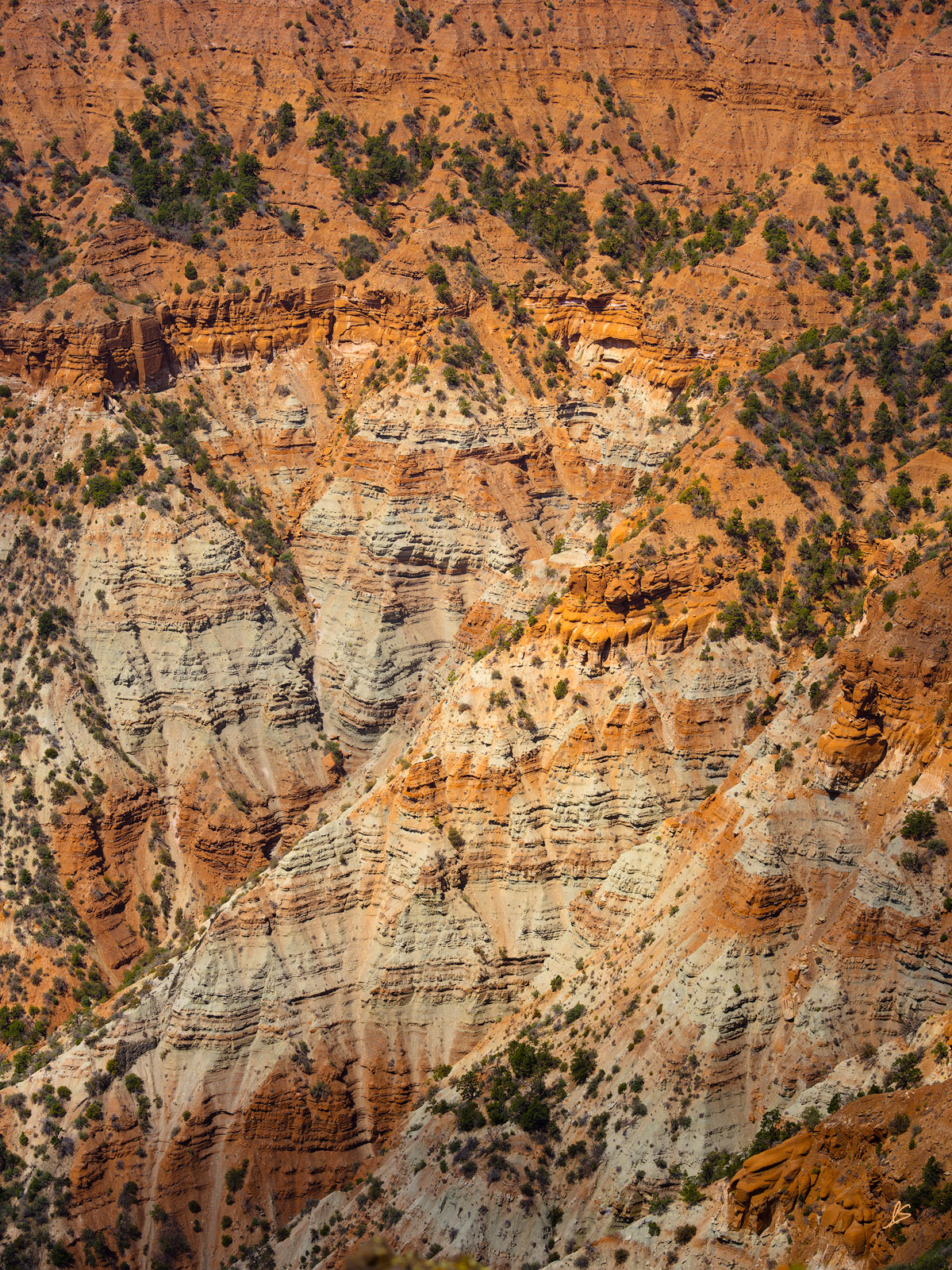
This view into Hells Hole on Mount Logan reveals a stark and elemental pocket of Grand Canyon–Parashant National Monument, where the Earth seems to have folded inward on itself—an open wound carved by time, water, and gravity. We see the raw geometry of the canyon walls, their striations a visible testament to ancient forces at work. In this remote and rarely visited location, silence dominates, and the landscape feels both unyielding and intimate—an encounter with the planet’s deeper architecture. Hells Hole is a place stripped of spectacle, yet filled with solemn power: a reminder that beauty and awe are often found in the land’s forgotten depths.
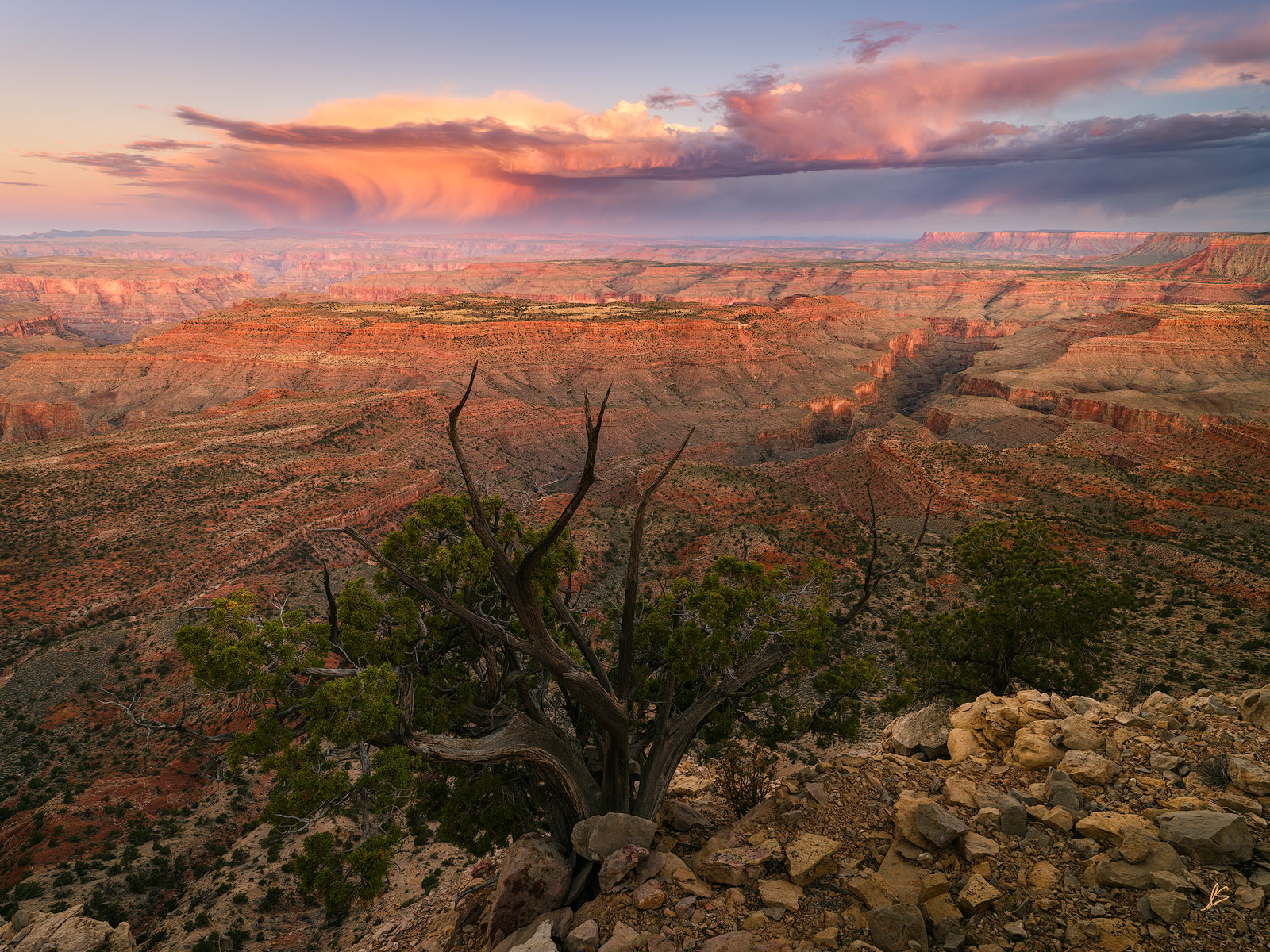
At Kelly Point, under the soft light of morning, a curtain of rain drifts from the sky, never touching the land below. This fleeting phenomenon, known as virga, feels like a whispered promise withdrawn mid-sentence, a gesture of grace that dissolves before it lands. The canyon watches in silence, waiting for what will not arrive. There is beauty in the yearning, in the space between giving and receiving, between presence and absence. In this still moment, the desert sky becomes a mirror of emotion, soft, vulnerable, and full of feeling that hovers just out of reach.
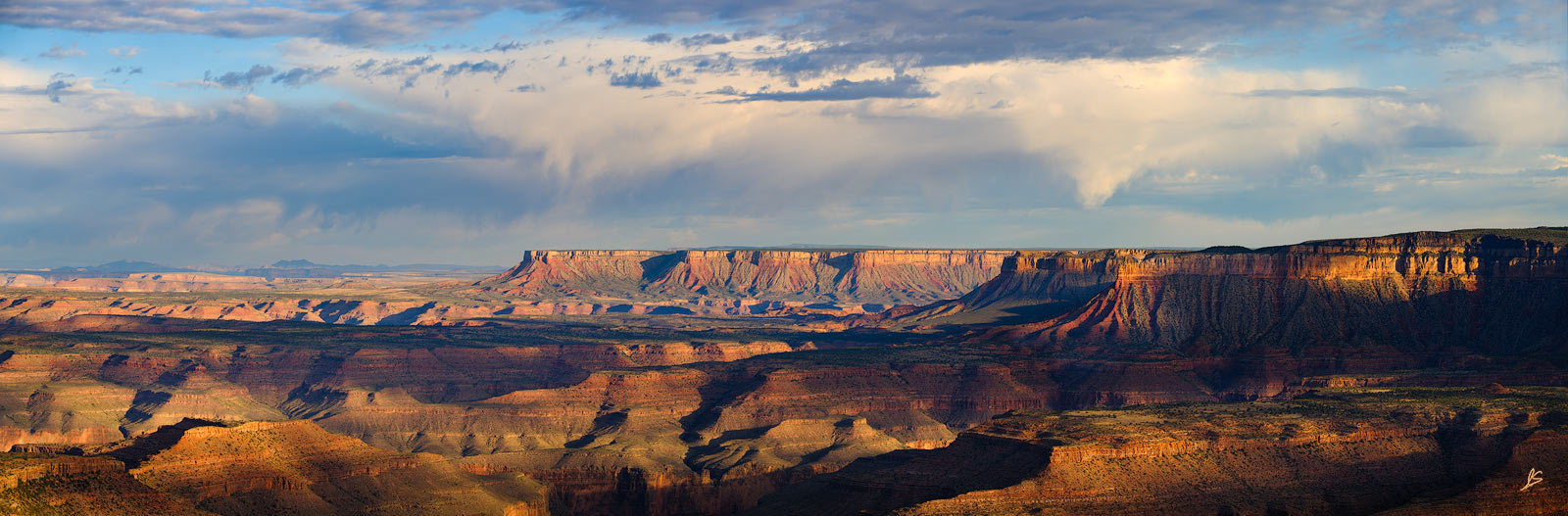
From Kelly Point, the land stretches in solemn majesty, layered in stone, silence, and memory. Across the far horizon, veils of virga descend like ghostly threads from the clouds, rain that falls with promise but never touches the waiting earth. In this immense and quiet moment, the canyon holds its breath. The air is thick with beauty and longing, as if the sky is reaching out with open hands only to let its offering dissolve into light.
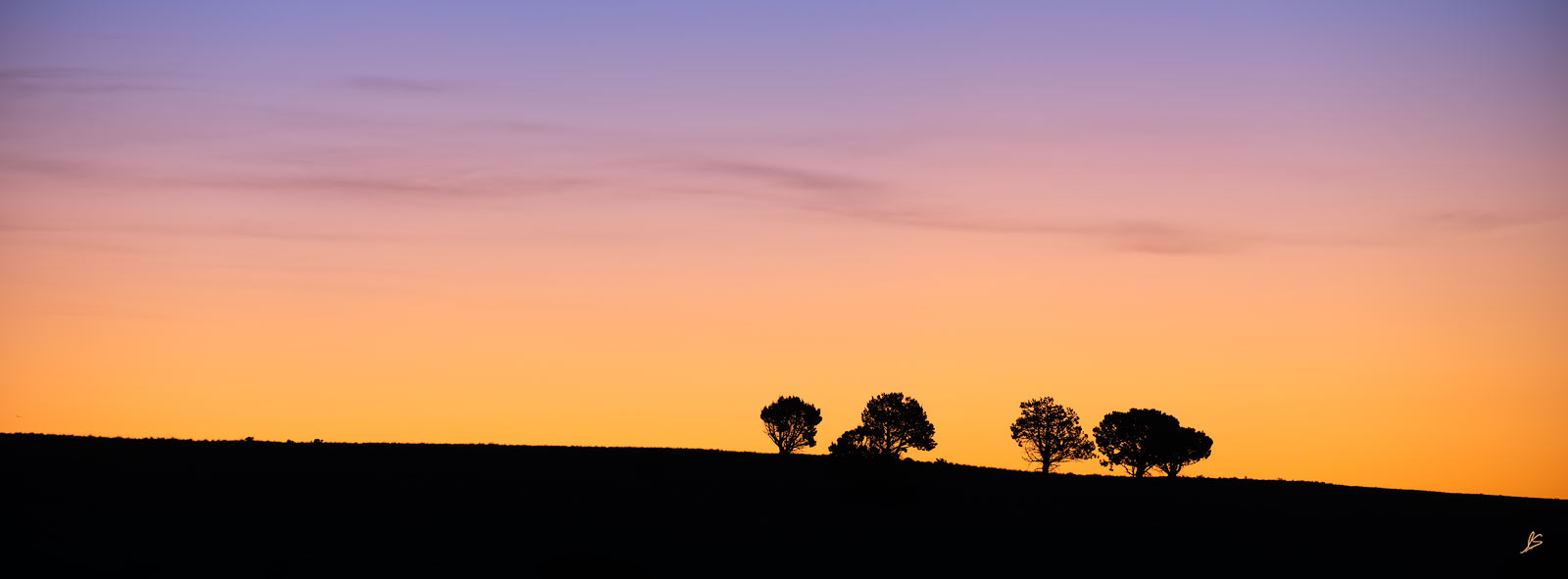
As sunrise approaches, light slowly fills the sky, unfolding the day with quiet care. This is not a dramatic sunrise, but a deliberate one—measured and patient, arriving with grace rather than urgency. In this remote corner of Parashant, the world feels unhurried, untouched, and deeply present. The moment passes quickly, but the feeling lingers: of light returning, and the land receiving it in silence. From Tweeds Hollow in Grand Canyon-Parashant National Monument in Arizona.
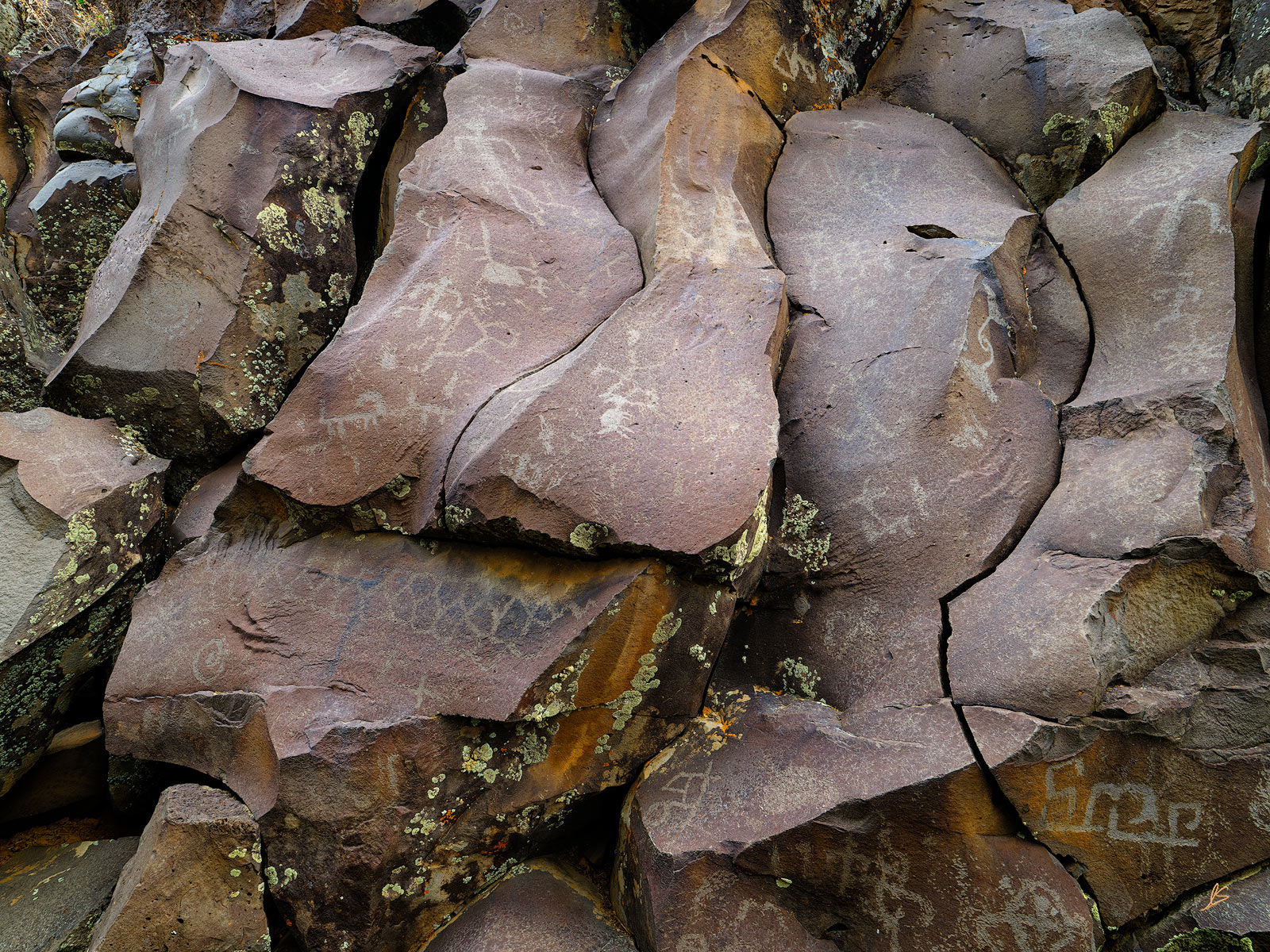
At Nampaweap, etched into volcanic stone, these petroglyphs speak across time—silent yet enduring, carved by ancestors who moved through this land with purpose and reverence. Each line, spiral, and figure holds meaning that may never be fully known, yet the feeling is unmistakable: this place mattered. The rock face becomes more than surface; it becomes story, offering a glimpse into the spiritual and everyday lives of those who came long before. Surrounded by the quiet of the high desert, the panel stands not as artifact, but as presence—a reminder that the land has always held memory, and that those who listened once left their marks in stone.
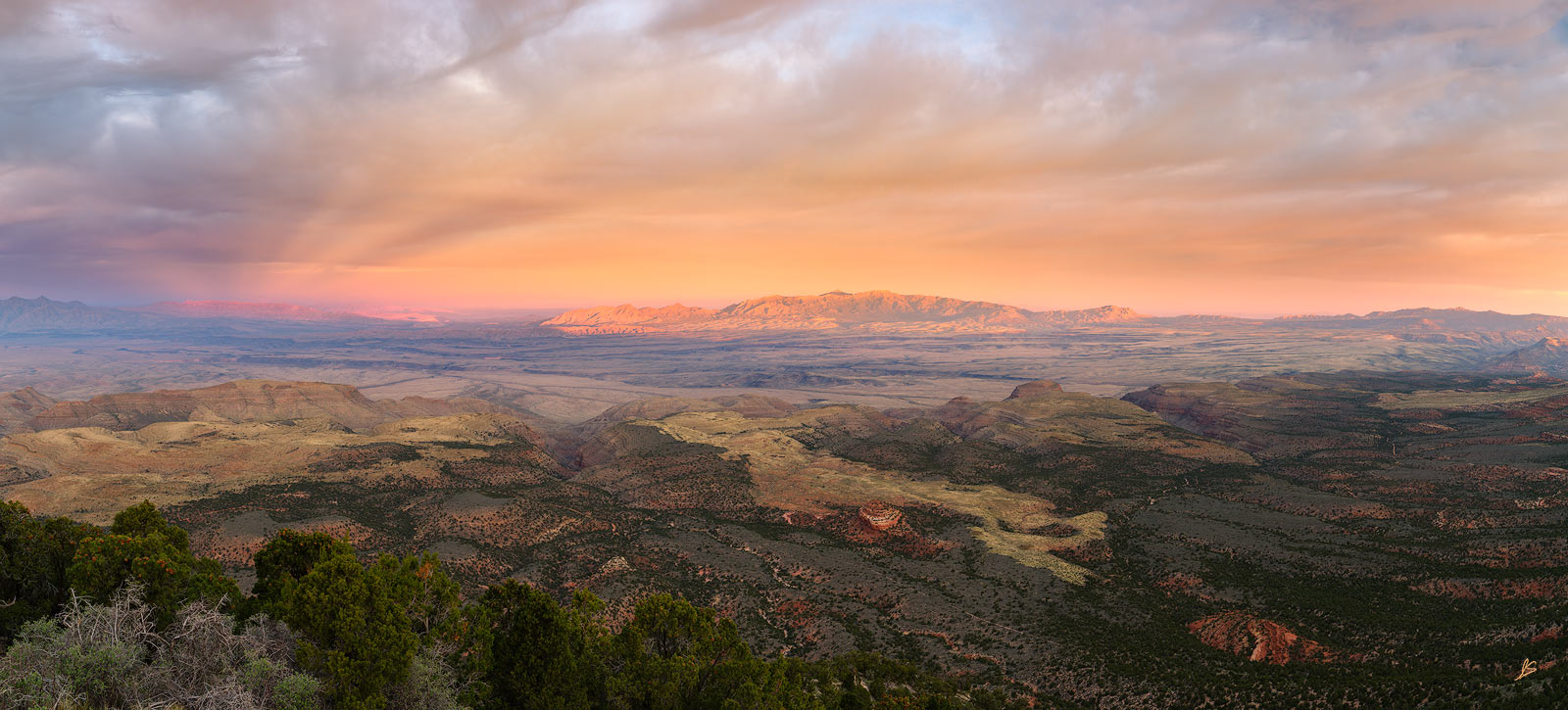
From Hudson Point in Grand Canyon-Parashant National Monument, the distant Mission Hills unfold in hushed layers, stretching outward into a silence that feels both vast and personal. There are no trails here, no signs of passage, only the slow rhythm of ridgelines dissolving into sky. In this solitude, there’s no need to speak. The land is enough. Its stillness doesn’t feel empty—it feels whole, complete in its remoteness. Standing at this overlook, you’re not just looking at the landscape—you’re standing inside its quiet, part of its long breath of time. Here, solitude becomes presence. It holds you.
This photograph is a custom size and requires specialized printing. Please get in touch with us for pricing and availability information.
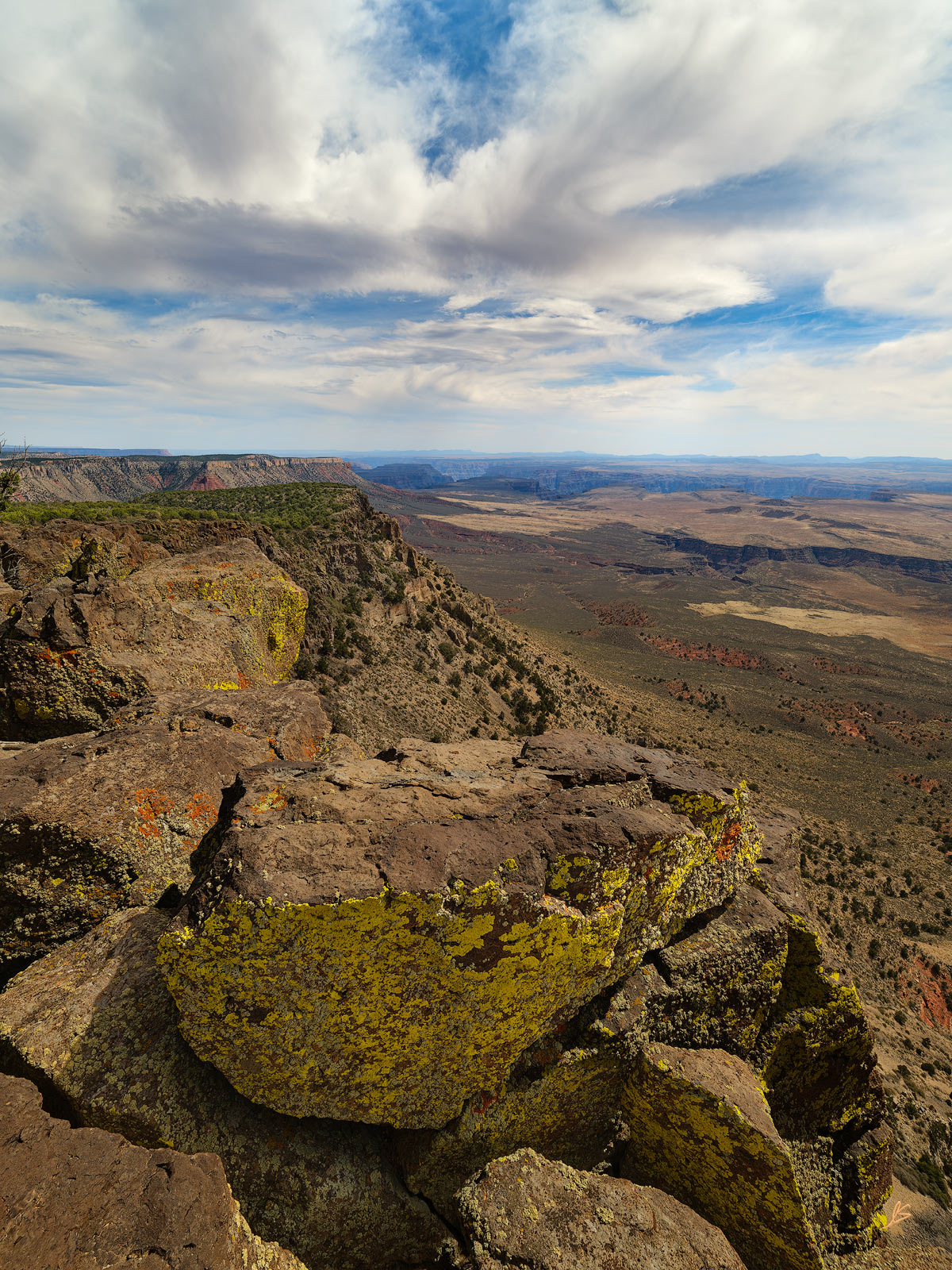
From Snap Point in Grand Canyon-Parashant National Monument, the westernmost point of the Grand Canyon, the land stretches out in every direction into a sky that seems impossibly wide. The wind moves through this space like a language without words, brushing across stone and skin, filling the silence with presence rather than sound. There is no movement, yet everything feels alive: the land breathes slowly, shaped by time, shaped by air. Here, you are not just looking, you are listening. To distance. To quiet. To the overwhelming feeling that the horizon never truly ends. In this moment, the world is both vast and still, and you are small in the best possible way.
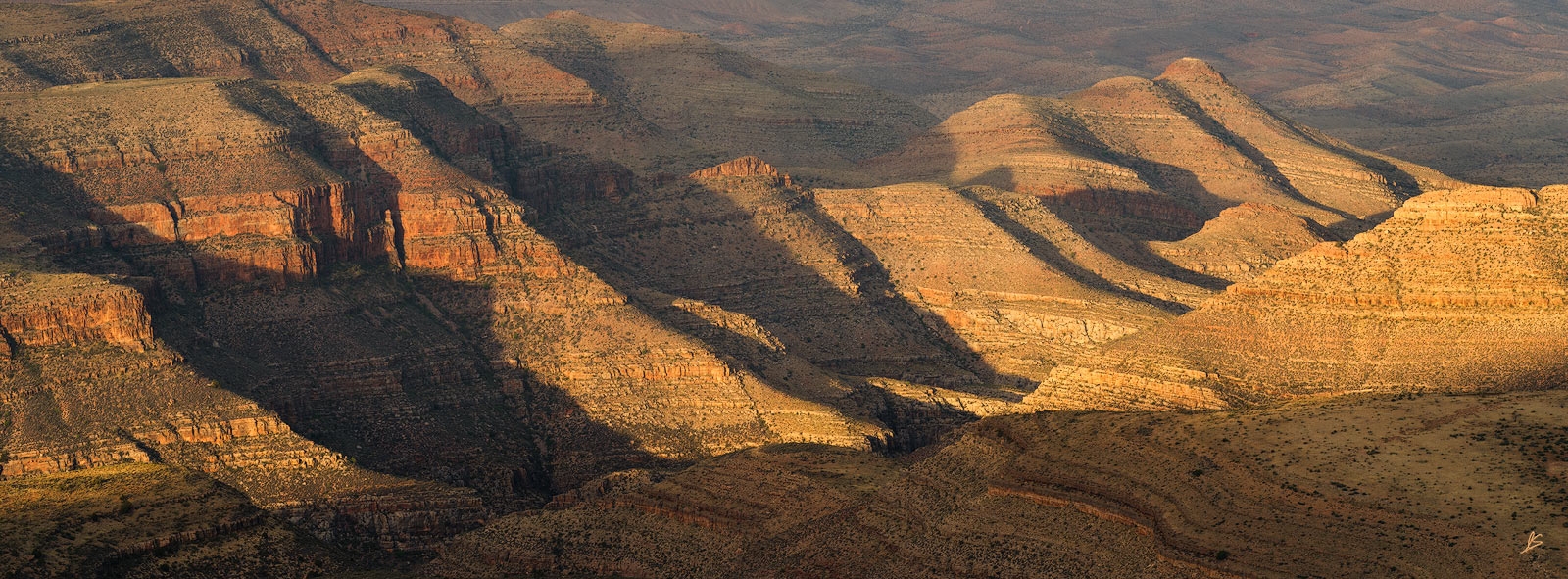
In this sweeping view of Squaw Canyon from Hudson Point in Grand Canyon-Parashant National Monument, the story of erosion reveals itself in every curve, terrace, and textured fold of stone. The canyon's sinuous lines—etched by wind, water, and gravity—reveal how the Earth moves slowly, yet relentlessly, over time. Once submerged beneath ancient seas, this landscape has been lifted, weathered, and sculpted into its current form by forces both violent and delicate. Each layer of exposed rock marks a chapter in geologic history, its colors and contours recording what the planet has endured and reshaped. Seen from this panoramic perspective, the canyon is more than land—it is a living archive of transformation, written patiently in stone.
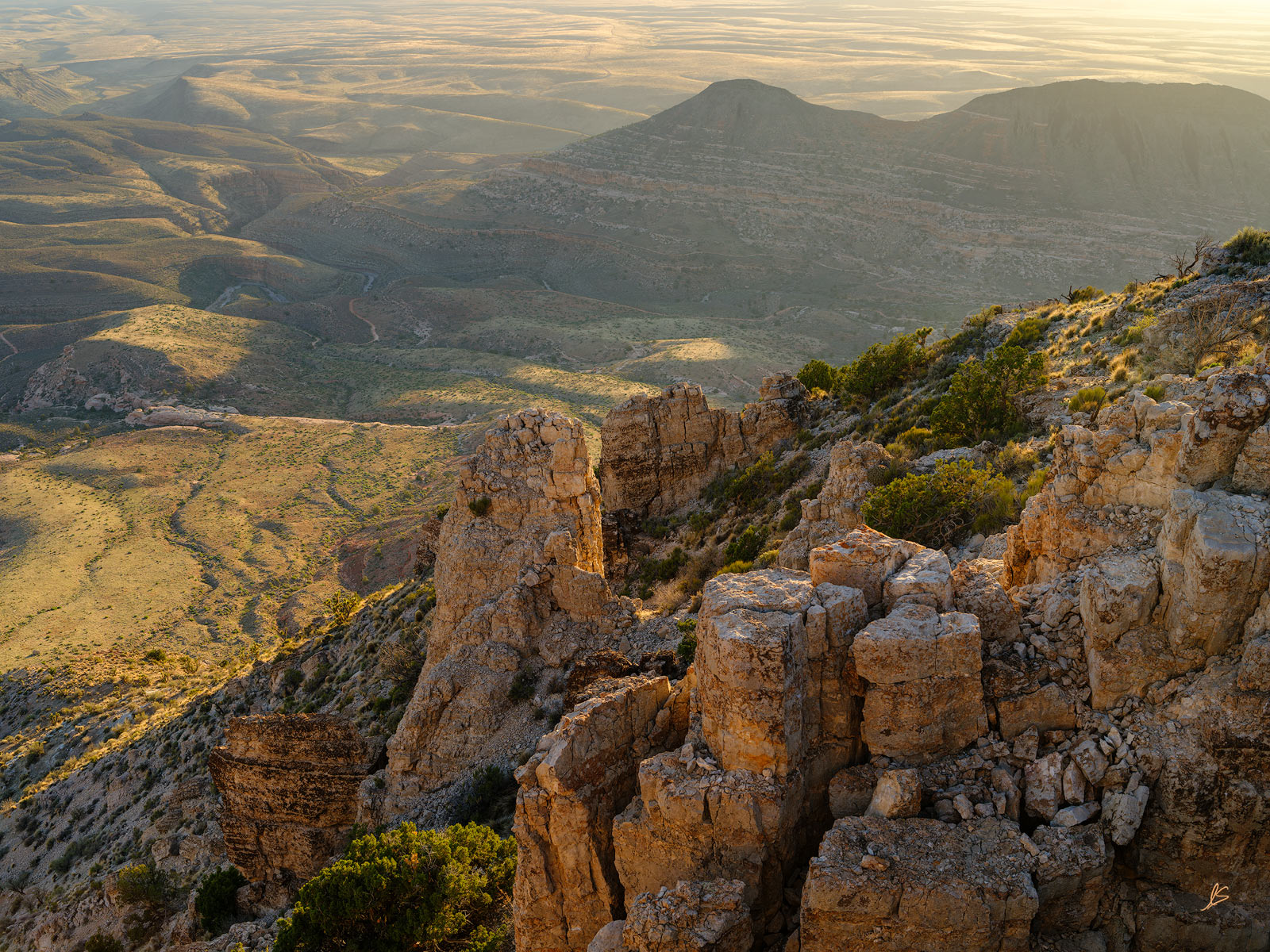
From Tweeds Point in Grand Canyon-Parashant National Monument, the landscape unfolds in soft layers of light and shadow, every ridge and valley gently veiled in atmosphere, as if brushed onto the horizon by hand. The depth is vast, yet softened by haze; the forms are immense, yet tender in the way they catch the day’s last light. In this moment, the land is not just seen—it is felt, suspended between presence and dream, where geology meets poetry in air and color.
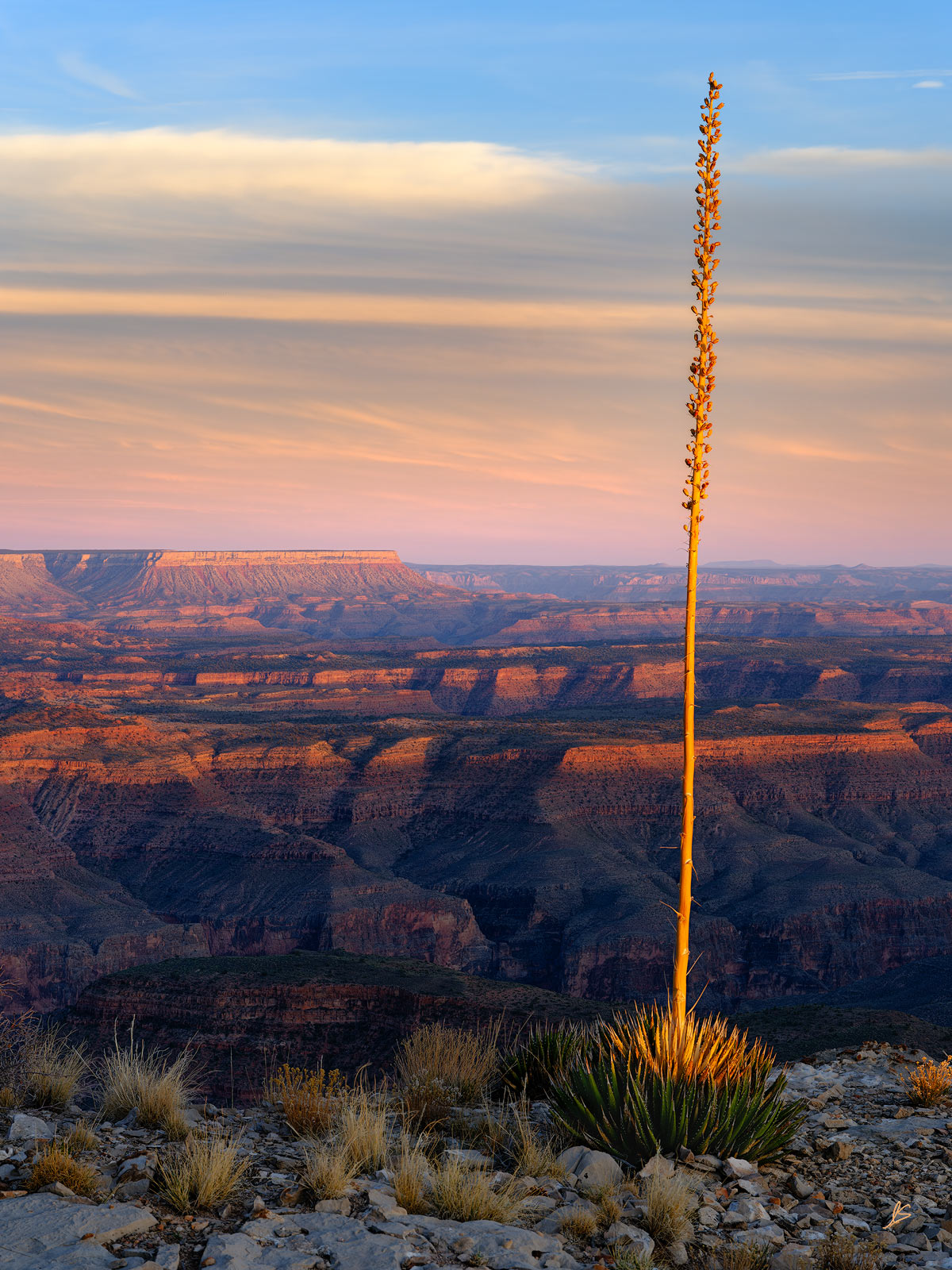
At Twin Point, the final rays of daylight brush the canyon below as a single agave stalk rises above the land—slender, solitary, and unwavering. It stands like a sentinel over the immense silence of the Grand Canyon, holding its place between stone and sky. Though its bloom has passed, the stalk remains—a memory of one final, reaching gesture. The distant cliffs fall away into shadow, while the agave catches the last of the sun, its shape etched against the soft colors of dusk. In this fleeting moment, the landscape feels suspended, and the lone stalk becomes more than a plant—it becomes presence, witness, and the still voice of endurance at the edge of the world.
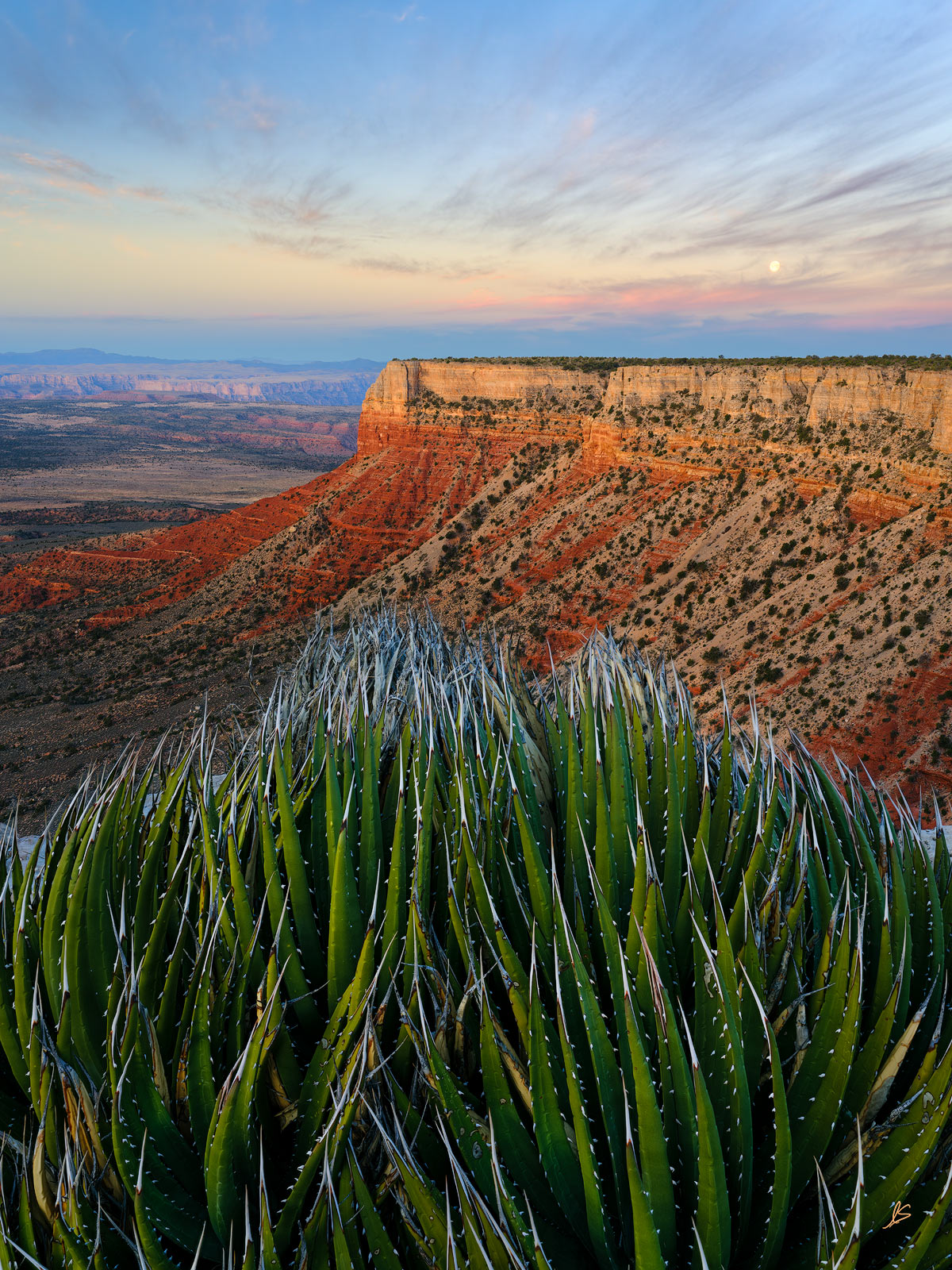
From the rim at Twin Point in Grand Canyon-Parashant National Monument, the moon begins its slow descent toward the far horizon. The land below is hushed and motionless as early morning light paints the landscape in an ethereal glow. The moon's presence—soft, steady, and ancient—echoes the endurance of the stone beneath it. In this quiet hour, the Earth and sky seem joined in a shared breath. The scene is not dramatic, but reverent—a gentle passage of light across a timeless landscape, where even the moon appears to bow before the canyon.

As the sun sinks low over the Grand Canyon, a last wash of warm light spills across the landscape, setting the land aglow in soft hues of amber and gold. The canyon slowly begins to fall into darkness, ridge by ridge, fold by fold—each illuminated edge giving way to shadowed depth. In this moment, the vastness feels intimate, as if the light is tracing the Earth’s form with reverence. Silence settles into the low places, and the wind pauses as the day’s last breath unveils the quiet architecture of geologic time.
It was really great to finally have the opportunity to explore Grand Canyon-Parashant National Monument, and I hope you enjoy the photos. Be sure to check out the full collection of photographs that I made during this expedition at the link below.